Pumpkin Seed, Saw Palmetto and Other Prostate Supplements: What the Evidence Shows
Prostate formulas promise fewer bathroom trips and a stronger stream. Here is what the research actually found for the most common ingredients, and how to shop without getting burned.
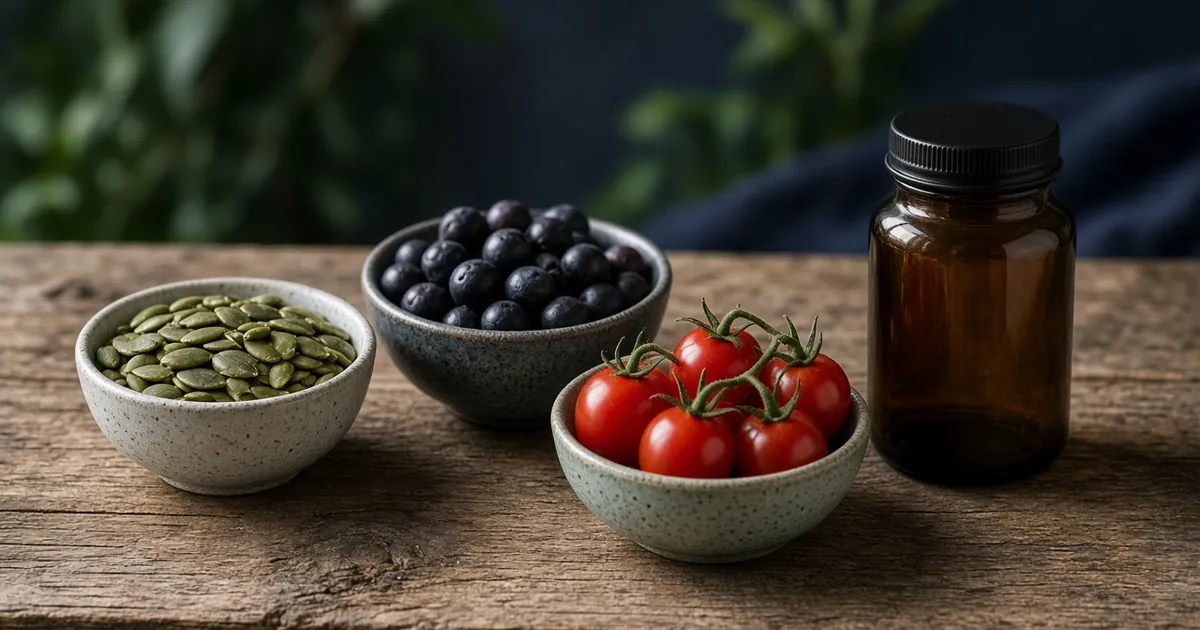
Walk down the supplement aisle or scroll past a few ads and you will find dozens of prostate formulas. Many promise to "shrink" the prostate, end night-time trips or restore a strong stream, often with a dramatic story attached. It is understandable to want something simple that works without a prescription.
The honest picture is less exciting. A few ingredients have been tested in proper trials, with mixed and mostly modest results. Many have not been tested for prostate symptoms at all. This guide goes through the evidence ingredient by ingredient so you can make an informed choice and know what questions to ask.
First, a word on how supplements are regulated
In the United States, the FDA does not approve dietary supplements for safety or effectiveness before they are sold. Manufacturers are responsible for making sure their products are safe and that their claims are truthful, and supplements are not allowed to claim they treat, cure or prevent a disease. The Federal Trade Commission expects health claims in advertising to be backed by solid scientific evidence, ideally good-quality human trials of the product or its specific ingredients at the dose sold.
That gives you a useful lens. When a sales page tells a story instead of showing trials, or claims to cure an enlarged prostate, it is a warning sign.
Saw palmetto
Saw palmetto is an extract from the berries of a small palm tree native to the southeastern United States. It is the most widely used prostate supplement and has been studied for decades.
The best summary is a Cochrane systematic review that pooled 32 randomized trials involving more than 5,600 men with BPH symptoms. It found that saw palmetto did not improve urinary symptoms or flow more than placebo, even at double or triple the usual dose. The National Center for Complementary and Integrative Health (NCCIH) reaches a similar conclusion: well-designed studies have not shown that saw palmetto reduces BPH symptoms.
Saw palmetto is generally well tolerated, with mild stomach upset or headache reported in some people. NCCIH notes it may not be appropriate for everyone, so it is worth checking with your doctor, especially if you take blood thinners.
Pumpkin seed
Pumpkin seeds contain plant sterols, healthy fats and minerals including zinc, and pumpkin seed products have long been used for urinary complaints in Europe.
The largest study we know of is the GRANU trial, a one-year randomized, placebo-controlled study of about 1,400 men with BPH symptoms. Men took either whole pumpkin seed (5 grams twice a day), a capsule containing pumpkin seed extract, or a placebo. The pumpkin seed group was somewhat more likely than placebo to see a meaningful drop in symptom scores. The pumpkin seed extract capsules did not beat placebo. Neither treatment changed objective measures like urine flow or the amount left in the bladder.
In other words, the evidence is real but modest, and it does not automatically apply to every product that lists "pumpkin seed" on the label. The form and dose matter. Pumpkin seeds are also simply a good food: a handful adds protein, fiber, magnesium and zinc to your day.
Beta-sitosterol and other plant sterols
Beta-sitosterol is a plant sterol found in many foods and in saw palmetto, pumpkin seed and other plant extracts. Some older, small trials reported improvements in urinary symptoms and flow, but the products and doses varied and long-term data are limited. It is a reasonable topic to discuss with your doctor, not a proven treatment.
Pygeum and stinging nettle root
Pygeum (from the bark of the African plum tree) and nettle root appear in many formulas. Older studies, often small and short, suggested possible modest benefits for urinary symptoms, but the quality of evidence is low and products are not standardized. Pygeum harvesting has also raised environmental concerns because the trees are threatened.
Lycopene and zinc
Lycopene is a red pigment found in tomatoes, watermelon and pink grapefruit. It is often linked with prostate health in marketing, mostly based on observational studies of diet and prostate cancer risk, which cannot prove cause and effect. There is little evidence that lycopene supplements relieve BPH symptoms.
Zinc is concentrated in prostate tissue, which is why it shows up in prostate formulas. The NIH Office of Dietary Supplements notes that most Americans get enough zinc from food, and that too much zinc from supplements over time can cause problems, including lowering copper levels and affecting immunity. The upper limit for adults is 40 mg a day from all sources.
Grape seed extract
Grape seed extract is rich in antioxidant compounds called proanthocyanidins. The NCCIH notes that it has been studied for conditions such as blood pressure and circulation, with limited evidence, and we found no good trials of grape seed extract for prostate or urinary symptoms. It is generally well tolerated but may interact with blood thinners.
Menthol and peppermint
Some recent prostate products feature menthol, the cooling compound in peppermint and mentholated rubs. The NCCIH's peppermint oil page describes evidence for peppermint oil in irritable bowel syndrome and for topical use in headaches. We are not aware of any human trials showing that oral menthol improves prostate or urinary symptoms. Products built around a "menthol trick" are making claims well ahead of the evidence.
A quick comparison
| Ingredient | Best evidence for BPH symptoms | Our read |
|---|---|---|
| Saw palmetto | Large Cochrane review of 32 trials | No better than placebo |
| Whole pumpkin seed | One large one-year trial | Small benefit over placebo |
| Pumpkin seed extract | Same trial | Not better than placebo |
| Beta-sitosterol | Older small trials | Possible, uncertain |
| Pygeum, nettle | Older small trials | Low-quality evidence |
| Lycopene | Mostly diet studies | Not shown for symptoms |
| Grape seed extract | No prostate trials found | Unproven |
| Menthol | No prostate trials found | Unproven |
How to shop more safely
The NCCIH's advice on using supplements wisely and the NIH Office of Dietary Supplements boil down to a few practical rules:
- Get checked first. Urinary symptoms can come from BPH, infection, diabetes, medications or, rarely, cancer. A supplement can mask the problem without fixing it.
- Read the full Supplement Facts panel. Look for each ingredient's dose, not just a "proprietary blend" total.
- Be wary of big promises. Promises to shrink the prostate, make BPH go away or replace your medication are red flags.
- Look for third-party testing seals such as USP or NSF, which check that the bottle contains what the label says.
- Check interactions. Tell your doctor and pharmacist about every supplement, especially if you take blood thinners or prostate medicines.
- Know the refund terms. Many online products are sold in multi-bottle bundles. Read the guarantee before you buy.
Our guide on how to judge a supplement goes deeper.
The bottom line
Saw palmetto, the most popular prostate herb, has not held up in good trials. Whole pumpkin seed has modest support from one large study. Most other ingredients, including grape seed extract and menthol, are unproven for prostate symptoms. If you choose to try a supplement, do it after a medical check, with realistic expectations and a clear label in hand.
Frequently asked questions
Does saw palmetto work for an enlarged prostate?
Large, well-designed reviews have found that saw palmetto does not improve urinary symptoms more than a placebo. Some men still report feeling better, which may reflect the placebo effect or natural ups and downs in symptoms.
Is eating pumpkin seeds good for the prostate?
Pumpkin seeds are a nutritious food, and one large trial found that whole pumpkin seed modestly improved symptom scores in men with BPH compared with placebo. They are not a substitute for a medical evaluation or prescribed treatment.
Can supplements replace prostate medication?
No supplement has been shown to work as well as prescription treatments for BPH. Do not stop or change a prescribed medication without talking to your doctor.
Are prostate supplements safe?
Many are well tolerated, but quality varies and some ingredients interact with medications. Choose products with clear labels and third-party testing, and tell your doctor what you take.
Sources
- Tacklind J, et al. Serenoa repens for benign prostatic hyperplasia. Cochrane Database Syst Rev. 2012 PubMed
- Saw Palmetto National Center for Complementary and Integrative Health (NIH)
- Vahlensieck W, et al. Effects of pumpkin seed in men with lower urinary tract symptoms due to benign prostatic hyperplasia in the one-year, randomized, placebo-controlled GRANU study. Urol Int. 2015 PubMed
- Grape Seed Extract National Center for Complementary and Integrative Health (NIH)
- Peppermint Oil National Center for Complementary and Integrative Health (NIH)
- Zinc: Fact Sheet for Consumers NIH Office of Dietary Supplements
- Prostate Enlargement (Benign Prostatic Hyperplasia) National Institute of Diabetes and Digestive and Kidney Diseases (NIH)
- Dietary Supplements U.S. Food and Drug Administration
- Health Products Compliance Guidance Federal Trade Commission
- Using Dietary Supplements Wisely National Center for Complementary and Integrative Health (NIH)
- Dietary Supplements: What You Need to Know NIH Office of Dietary Supplements