Why Men Sleep Worse After 50 (and What Actually Helps)
Lighter sleep, 4 a.m. wake-ups and bathroom trips are common after 50. Here is what is behind them and the changes that tend to make the biggest difference.
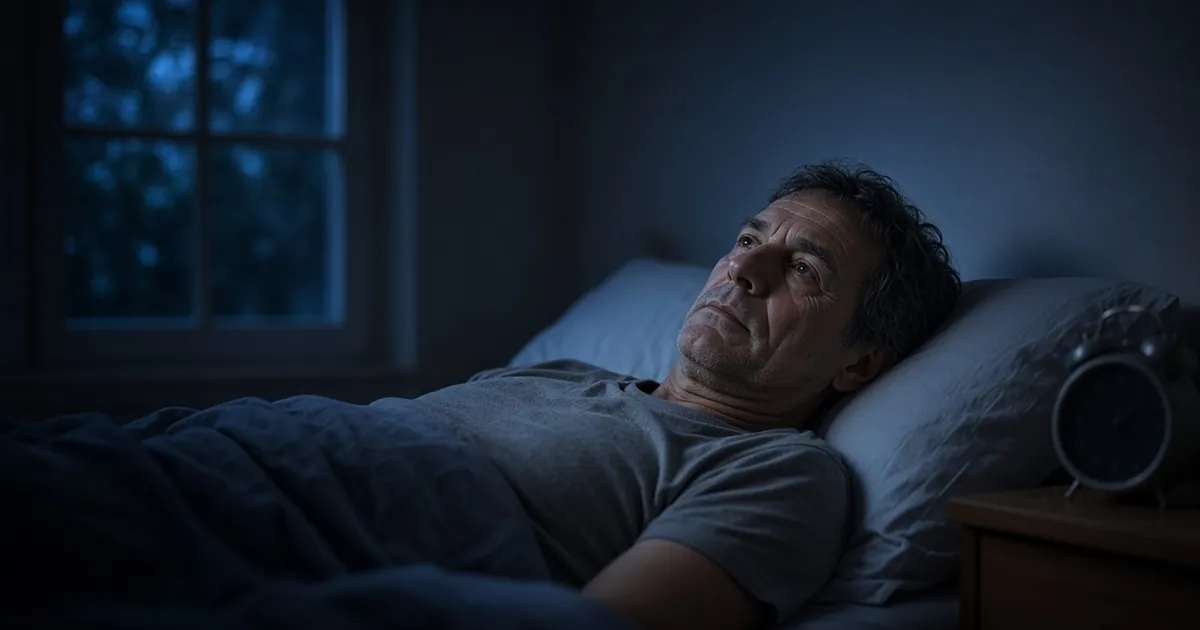
Plenty of men can remember sleeping like a log in their 20s and 30s. Somewhere after 50, it changes. You wake at 2 or 4 a.m. and lie there, or you get up to use the bathroom and cannot get back to sleep, or your partner complains that your snoring rattles the windows. By morning you have been in bed for eight hours but feel as if you slept for five.
You are not imagining it, and it is not a character flaw. Sleep really does change with age. But a lot of what makes sleep worse after 50 is not age itself; it is things layered on top of it, and many of those can be changed.
How much sleep do you need after 50?
The CDC and the National Heart, Lung, and Blood Institute recommend seven or more hours a night for adults, and the National Institute on Aging is clear that older adults need about the same amount as younger adults. The idea that older men "just need less sleep" is a myth.
Many adults fall short. The CDC's sleep statistics show that a large share of Americans regularly sleep less than seven hours. Short sleep is linked with higher risks of heart disease, type 2 diabetes, obesity, depression and accidents, and it makes concentration, mood and motivation harder.
What changes in sleep with age
Sleep moves through cycles of lighter sleep, deep sleep and dreaming (REM) sleep several times a night. The National Institute of Neurological Disorders and Stroke explains that deep sleep is especially important for feeling restored. With age, most people spend less time in deep sleep and wake more easily, so noises, discomfort or a full bladder are more likely to pull you out of sleep.
The body clock also tends to shift earlier. Many older men feel sleepy earlier in the evening and wake earlier in the morning. If you fight that by staying up late and then wake at 5 a.m. anyway, you end up short.
The common sleep thieves after 50
Night-time bathroom trips
This is one of the most common reasons men over 50 sleep poorly. An enlarged prostate, evening fluids, caffeine, alcohol, some medications, swollen ankles and high blood sugar can all add trips. Our guide to night-time urination covers causes and fixes.
Snoring and sleep apnea
Snoring tends to get louder with age and weight gain. Sometimes it signals obstructive sleep apnea, where the airway repeatedly closes during sleep and breathing stops for a few seconds. The NHLBI lists loud snoring, gasping or choking, morning headaches and daytime sleepiness as warning signs. Untreated apnea fragments sleep and strains the heart. See our guide to snoring and sleep apnea.
Alcohol
A drink or two may help you nod off, but alcohol makes the second half of the night lighter and more broken, worsens snoring and apnea, and increases urine production. It is one of the easiest things to experiment with. Our article on caffeine, alcohol and sleep explains the details.
Caffeine
Caffeine can stay in your system for many hours. An afternoon coffee or energy drink can still be working at bedtime, even if you fall asleep fine.
Pain and stiffness
Aching knees, hips, shoulders or back can make it hard to get comfortable and wake you when you turn over. Staying active during the day, a supportive mattress and talking to your doctor about persistent pain all help.
Screens and bright light at night
Harvard Health explains that light at night, especially the blue light from phones, tablets and TVs, suppresses melatonin, the hormone that tells your body it is time to sleep. Scrolling the news in bed is a double hit: bright light plus a busy mind.
Stress and worry
Work, money, health and family worries tend to surface at 3 a.m. Stress keeps the body on alert, which is the opposite of what you need for sleep.
Medications and health conditions
Some blood pressure medicines, steroids, decongestants and antidepressants can affect sleep. Conditions like heart failure, lung disease, reflux and depression do too. MedlinePlus lists common sleep disorders, including insomnia, restless legs syndrome and sleep apnea.
What actually helps
These steps come from Mayo Clinic and the National Institute on Aging, and they work best in combination.
1. Keep the same wake time every day
A consistent wake time, weekends included, is the strongest signal for your body clock. Go to bed when you feel sleepy, not just because it is a certain hour.
2. Get daylight in the morning
Step outside for 15 to 30 minutes soon after waking. A morning walk combines light and activity, both of which help set your clock and deepen sleep.
3. Move during the day
Regular physical activity is linked with better sleep quality. Aim for activity most days, but finish vigorous workouts a few hours before bed if they keep you wired.
4. Set up the bedroom for sleep
Keep it cool, dark and quiet. Blackout curtains, a fan for background noise and a comfortable mattress and pillow all matter. Keep the TV and phone out of bed if you can.
5. Time caffeine and alcohol
Stop caffeine by early afternoon. If you drink, try several alcohol-free nights a week and notice how you sleep.
6. Taper fluids in the evening
Drink most of your fluids earlier in the day and limit drinks in the two to three hours before bed to cut bathroom trips.
7. Build a wind-down hour
Dim the lights, put screens away and do something calming: reading, a warm shower, stretching or slow breathing. Our wind-down routine for men gives a simple plan.
8. If you cannot sleep, get up
If you have been awake for what feels like 20 minutes, get up, go to another dim room and do something quiet until you feel sleepy. Lying there frustrated trains your brain to associate bed with being awake.
9. Keep naps short and early
A 20 to 30 minute nap early in the afternoon is fine for most people. Long or late naps make night sleep harder.
What about sleeping pills and melatonin?
Over-the-counter sleep aids often contain antihistamines, which can cause next-day grogginess, confusion, constipation and trouble urinating, a particular problem for men with an enlarged prostate. They are generally not recommended for regular use in older adults. Melatonin is popular, but evidence for long-term insomnia is limited and product quality varies. For chronic insomnia, cognitive behavioral therapy for insomnia (CBT-I) is widely recommended as a first-line treatment.
The bottom line
Sleep gets lighter after 50, but most of what makes it worse is fixable: bathroom trips, snoring and apnea, alcohol, caffeine, screens, pain and stress. Start with a fixed wake time, morning daylight, a cool dark bedroom and smarter evening habits. If you still sleep badly, or you notice signs of sleep apnea, take it seriously and see a doctor.
Frequently asked questions
Do older men need less sleep?
No. Adults of all ages are advised to get seven or more hours a night. Older men often get less because sleep becomes lighter and more broken, not because they need less.
Why do I wake up at 4 a.m. every day?
Common reasons include an earlier body clock, a full bladder, alcohol the night before, stress, light or noise in the bedroom and sleep apnea. A consistent schedule and evening habits help, and a doctor can check for sleep disorders.
Is it normal to snore more after 50?
Snoring often increases with age and weight gain, but loud snoring with pauses in breathing or gasping may be sleep apnea, which should be evaluated.
Should I take melatonin for sleep?
Talk to your doctor first. Melatonin may help some people with jet lag or shifted sleep timing, but evidence for long-term insomnia is limited and product quality varies.
Sources
- About Sleep Centers for Disease Control and Prevention
- How Much Sleep Is Enough? National Heart, Lung, and Blood Institute (NIH)
- Sleep and Older Adults National Institute on Aging (NIH)
- A Good Night's Sleep National Institute on Aging (NIH)
- Brain Basics: Understanding Sleep National Institute of Neurological Disorders and Stroke (NIH)
- Sleep tips: 6 steps to better sleep Mayo Clinic
- Sleep Apnea National Heart, Lung, and Blood Institute (NIH)
- Blue light has a dark side Harvard Health Publishing
- Sleep Disorders MedlinePlus (National Library of Medicine)
- FastStats: Sleep in Adults Centers for Disease Control and Prevention