Tingling or Numb Feet After 50: Causes and Nerve-Friendly Habits
Pins and needles, numbness or burning in the feet are common complaints after 50, and they deserve attention. Here is what can cause them, what to watch for and how to look after your nerves and feet.
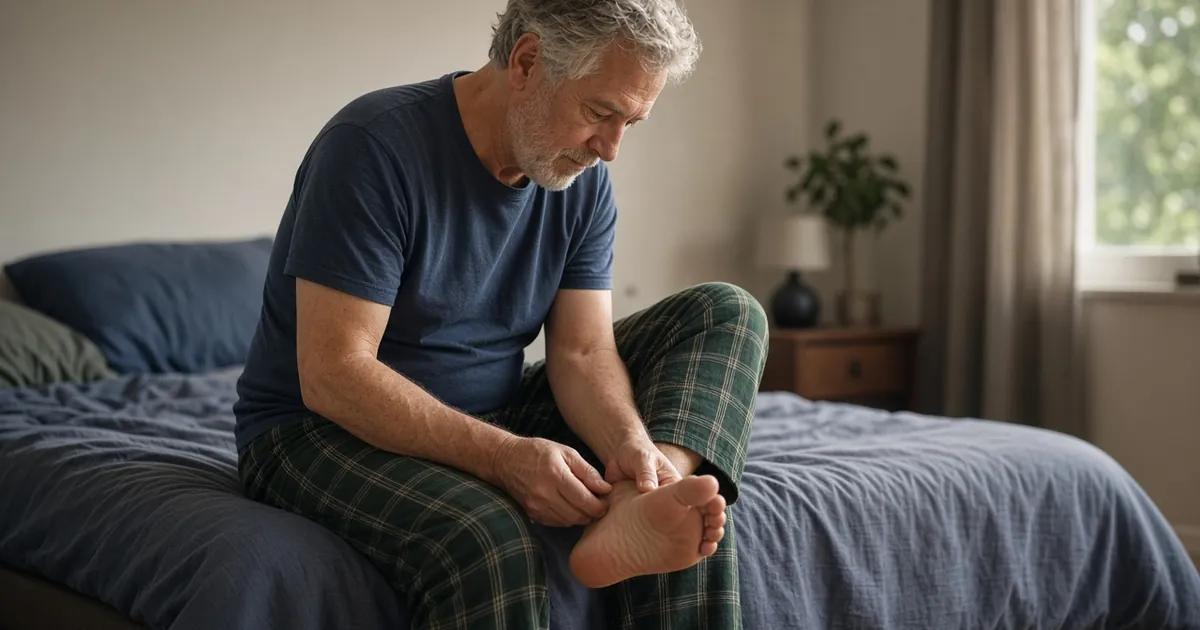
Maybe it started as a mild tingling in your toes at night. Or your feet feel like they are wrapped in cotton, or they burn when you lie down. Many men over 50 notice changes like these and shrug them off. But persistent tingling or numbness in the feet can be a sign of nerve damage, and finding the cause early matters.
What is peripheral neuropathy?
The peripheral nerves carry messages between the brain and spinal cord and the rest of the body. They control sensation, movement and automatic functions like blood pressure and digestion.
The National Institute of Neurological Disorders and Stroke (NINDS) explains that peripheral neuropathy occurs when these nerves are damaged. It often starts in the longest nerves, which reach the toes and feet, and may later affect the hands.
Common symptoms
Mayo Clinic lists these common symptoms:
- Gradual onset of numbness, prickling or tingling in the feet or hands, which can spread upward
- Sharp, jabbing, throbbing or burning pain
- Extreme sensitivity to touch
- Pain during activities that should not cause pain, like the weight of bedsheets on your feet
- Lack of coordination and falling
- Muscle weakness
- Feeling like you are wearing socks or gloves when you are not
Symptoms are often worse at night.
Common causes
Diabetes
Diabetes is the most common cause of peripheral neuropathy. The NIDDK explains that high blood sugar over time damages nerves and the small blood vessels that nourish them. Up to half of people with diabetes develop some form of nerve damage. Neuropathy can also begin in prediabetes. The CDC notes that most people with prediabetes do not know they have it. See our guide to blood sugar habits after 50.
Vitamin B12 deficiency
Low vitamin B12 can damage nerves. The Office of Dietary Supplements explains that adults over 50, people taking metformin and people taking acid-reducing medications long-term are at higher risk. See our guide to vitamin D, B12 and magnesium after 50.
Alcohol
Heavy, long-term drinking can damage nerves directly and through poor nutrition. The National Institute on Aging notes that older adults are more sensitive to alcohol.
Other causes
- Medications, including some chemotherapy drugs and certain antibiotics
- Kidney or liver disease
- Underactive thyroid
- Autoimmune diseases such as rheumatoid arthritis or lupus
- Infections such as shingles, Lyme disease or HIV
- Injury or pressure on a nerve, such as from a back problem
- Toxins, such as heavy metals
- Inherited conditions
Sometimes no cause is found, which is called idiopathic neuropathy.
Why it matters
Neuropathy can affect more than comfort:
- Foot injuries: if you cannot feel your feet well, you may not notice cuts, blisters or sores, which can become infected. This is especially serious with diabetes.
- Falls: numb feet affect balance. The National Institute on Aging lists foot problems among fall risk factors. See our guide to balance and fall prevention.
- Sleep: burning or tingling at night can disrupt sleep.
- Other nerves: some types of neuropathy affect nerves that control digestion, bladder, blood pressure or sexual function.
How it is diagnosed
Your doctor will ask about your symptoms, health conditions, medications and alcohol use, and examine your feet, reflexes, strength and sensation. Tests may include:
- Blood tests for blood sugar (A1C), vitamin B12, thyroid function, kidney and liver function
- Nerve conduction studies and electromyography (EMG) to measure how well nerves and muscles work
- Other tests depending on the suspected cause
Treatment
Treatment focuses on the cause and on relieving symptoms:
- Managing blood sugar if you have diabetes or prediabetes
- Correcting B12 deficiency with supplements or injections
- Cutting back on or stopping alcohol
- Changing medications that may be contributing, under your doctor's guidance
- Medications for nerve pain, which differ from typical pain relievers
- Physical therapy to improve strength and balance
Some nerve damage can improve when the cause is treated, especially if caught early.
Nerve-friendly daily habits
Check your feet every day
Look at the tops and bottoms of your feet and between your toes for cuts, blisters, redness, swelling or sores. Use a mirror or ask someone to help if needed.
Wash and dry carefully
Wash your feet daily in warm (not hot) water, test the temperature with your elbow, and dry well, especially between the toes.
Moisturize, but not between toes
Dry, cracked skin can let in infection.
Wear good shoes and socks
Choose well-fitting, cushioned shoes and seamless socks. Check inside shoes for stones or rough spots before putting them on. Do not go barefoot, even at home.
Trim nails carefully
Cut straight across and file the edges. See a podiatrist if you have trouble.
Stay active
Regular activity improves blood flow and blood sugar control. The CDC recommends 150 minutes of moderate activity a week for older adults. Walking, swimming and cycling are good options. See our guide to walking for health.
Limit alcohol and do not smoke
Both damage nerves and blood vessels.
Eat a balanced diet
Make sure you get enough B vitamins from food or supplements if recommended.
What about supplements for neuropathy?
Many supplements are marketed for nerve health. B12 helps if you are deficient. Some other supplements, such as alpha-lipoic acid, have been studied for diabetic neuropathy, with mixed results. The NINDS emphasizes treating the underlying cause. Talk to your doctor before taking any supplement, especially if you have diabetes or take other medicines.
The bottom line
Tingling, numbness or burning in the feet after 50 is common, but it is not something to ignore. Diabetes and low B12 are frequent, treatable causes. Get checked, look after your feet every day, keep blood sugar in check, stay active and limit alcohol. Early attention can prevent further nerve damage and protect your mobility.
Frequently asked questions
What causes tingling in the feet after 50?
Common causes include diabetes, prediabetes, vitamin B12 deficiency, heavy alcohol use, medications, kidney disease and thyroid problems. A doctor can help find the cause.
Is tingling in the feet serious?
It can be a sign of nerve damage that needs attention. See a doctor if it lasts more than a few days, spreads, or comes with weakness or sores.
Can neuropathy be reversed?
It depends on the cause and how early it is treated. Treating diabetes, B12 deficiency or alcohol use can sometimes improve symptoms or prevent them getting worse.
How do I protect my feet if I have neuropathy?
Check your feet daily, wash and dry them carefully, wear well-fitting shoes and socks, avoid going barefoot and see a podiatrist for nail and foot care if needed.
Sources
- Peripheral Neuropathy National Institute of Neurological Disorders and Stroke (NIH)
- Diabetic Neuropathy National Institute of Diabetes and Digestive and Kidney Diseases (NIH)
- Peripheral neuropathy: Symptoms and causes Mayo Clinic
- Vitamin B12: Fact Sheet for Consumers NIH Office of Dietary Supplements
- Preventing Type 2 Diabetes Centers for Disease Control and Prevention
- Facts About Aging and Alcohol National Institute on Aging (NIH)
- Older Adult Activity: An Overview Centers for Disease Control and Prevention
- Falls and Fractures in Older Adults: Causes and Prevention National Institute on Aging (NIH)