Walking for Health After 50: How Much, How Fast and How to Stick With It
Walking is the easiest, cheapest and most underrated exercise for men over 50. Here is how much you need, how to make it count and a simple plan to build the habit.

Walking does not have the glamour of a new gym membership or a marathon training plan, but it may be the single most useful exercise for men over 50. It needs no equipment beyond decent shoes, it is gentle on the joints, you can do it almost anywhere, and the health benefits are backed by a mountain of research.
Why walking works
The American Heart Association notes that walking is a simple way to improve heart health, and that regular walking can lower the risk of heart disease, improve blood pressure and blood sugar, help with weight management, boost mood and improve sleep.
The National Institute on Aging adds that regular physical activity helps older adults stay independent and can reduce the risk of many chronic conditions. And the CDC recommends walking as a joint-friendly activity for people with arthritis.
Other benefits for men include:
- Lower blood pressure. The CDC lists regular activity as a key way to manage it.
- Better blood sugar control, especially walking after meals.
- Stronger bones and legs.
- Less stress and better mood.
- More time outdoors and, if you walk with others, more social contact.
How much should you walk?
The CDC's guidelines for older adults recommend:
- At least 150 minutes a week of moderate-intensity activity, such as brisk walking. That is 30 minutes, 5 days a week.
- Muscle-strengthening activities at least 2 days a week.
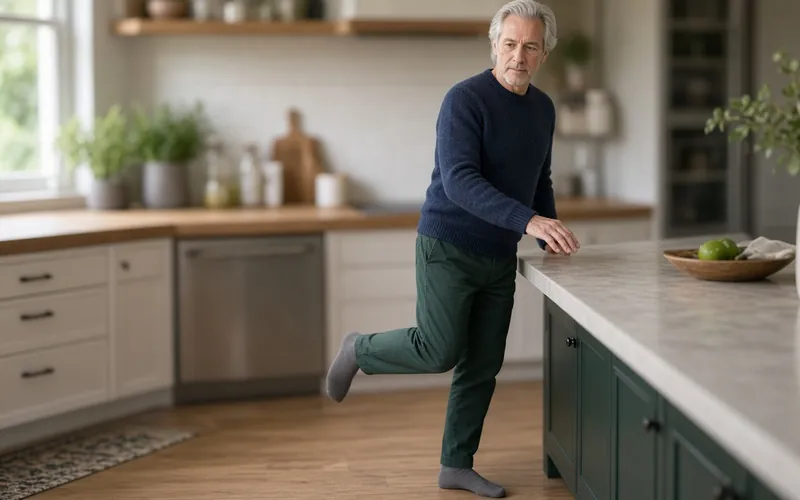
- Balance activities, such as standing on one foot.
The same 150-minute target applies to all adults, per the CDC. If 30 minutes at once is too much, three 10-minute walks count too. And anything is better than nothing.
How brisk is brisk?
Moderate intensity means your heart is beating faster and you are breathing harder, but you can still talk in full sentences. You should not be able to sing. On a 0-10 effort scale, it feels like a 5 or 6.
Some research suggests that a cadence of about 100 steps per minute or more corresponds to moderate intensity for many adults. You can count your steps for 15 seconds and multiply by four, or use a phone or watch.
What about 10,000 steps?
The 10,000-steps goal began as a marketing slogan, not a scientific target. Research suggests that health benefits increase as daily steps rise, and that for older adults benefits may level off at somewhat lower numbers, roughly 6,000 to 8,000 steps a day. If you currently walk 3,000 steps a day, aiming for 5,000 is a great start.
A 6-week starter plan
| Week | Walks per week | Time per walk | Pace |
|---|---|---|---|
| 1 | 3-4 | 10-15 minutes | Comfortable |
| 2 | 4-5 | 15 minutes | Comfortable, with 2-3 brisk minutes |
| 3 | 5 | 20 minutes | Mostly brisk |
| 4 | 5 | 25 minutes | Brisk |
| 5 | 5 | 30 minutes | Brisk |
| 6 | 5+ | 30+ minutes | Brisk, add a hill or a faster interval |
Begin and end each walk with a few minutes of easy pace.
Adding challenge
Once 30 minutes feels easy:
- Intervals: alternate 2 minutes brisk with 1 minute very brisk.
- Hills: walking uphill raises intensity without needing more speed.
- Longer walks: add a 60-minute weekend walk or hike.
- Nordic poles: walking poles work your upper body and can improve stability.
Shoes and gear
- Shoes: choose comfortable walking or running shoes with good cushioning and support. Replace them every 300-500 miles or when the cushioning feels flat.
- Socks: moisture-wicking socks help prevent blisters.
- Clothing: layers you can remove as you warm up; bright colors or reflective gear for early mornings and evenings.
- Water: carry it on long or hot walks.
Making it stick
- Schedule it. Treat walks like appointments.
- Link it to a habit: after breakfast, at lunch or after dinner.
- Walk with someone: a partner, friend, neighbor or dog. Walking groups are common through parks, community centers and malls.
- Track progress with a phone, watch or a simple notebook.
- Mix routes to keep it interesting.
- Listen to podcasts or audiobooks if walking alone.
- Have a bad-weather plan: a mall walk, treadmill or indoor track.
Walking is great, but not everything
Walking is excellent for the heart and general health, but it does not do enough to maintain muscle strength and balance as you age. Add strength training at least two days a week; Mayo Clinic explains its benefits, and our strength training guide shows how. Add simple balance exercises too; see our guide to balance and fall prevention.
Staying safe
- Talk to your doctor first if you have heart disease, chest pain, dizziness or other serious conditions, or have been inactive for a long time.
- Start slowly and build up.
- Watch the weather: avoid extreme heat and icy paths.
- Be visible at dawn and dusk.
- Carry your phone and some ID.
- Listen to your body: stop if you feel chest pain, severe shortness of breath, dizziness or faintness.
The American Heart Association has more guidance on activity for adults.
Walking with aches and pains
Many men put off walking because of sore knees, hips or feet. Some tips:
- Choose softer surfaces like trails, tracks or grass when joints ache.
- Shorten your stride and walk a little more slowly at first.
- Warm up with a few minutes of easy walking or gentle leg swings.
- Try walking poles to take some load off the knees.
- Swap in water walking or cycling on days when walking hurts.
- Check your shoes; worn-out cushioning often causes new aches.
Mild muscle soreness after a new routine is normal. Joint pain that lingers or swelling deserves a check with your doctor or a physical therapist. See our guide to stiff joints in the morning.
The bottom line
Walking is one of the best things a man over 50 can do for his heart, blood pressure, blood sugar, weight, mood and sleep. Aim for 150 minutes a week of brisk walking, build up gradually, add strength and balance work, and make it a habit you enjoy. The best walk is the one you actually take.
Frequently asked questions
Is walking enough exercise for men over 50?
Walking is excellent aerobic exercise, but guidelines also recommend strength training at least two days a week and balance exercises for older adults.
How many steps a day should a 60-year-old man walk?
Research suggests benefits increase with more steps, and for older adults many benefits come at about 6,000 to 8,000 steps a day. Increase gradually from your current level.
Is it better to walk fast or long?
Both help. Brisk walking gives more benefit per minute, while longer walks add total activity. A mix of both is ideal.
Can walking lower blood pressure?
Regular aerobic activity such as brisk walking can help lower blood pressure, along with other lifestyle changes and medication if needed.
Sources
- Older Adult Activity: An Overview Centers for Disease Control and Prevention
- Adult Activity: An Overview Centers for Disease Control and Prevention
- Walking American Heart Association
- AHA Recommendations for Physical Activity in Adults American Heart Association
- Three Types of Exercise Can Improve Your Health and Physical Ability National Institute on Aging (NIH)
- Arthritis Centers for Disease Control and Prevention
- About High Blood Pressure Centers for Disease Control and Prevention
- Strength training: Get stronger, leaner, healthier Mayo Clinic