Fiber for Men Over 50: How Much You Need and Easy Ways to Get It
Most men eat far less fiber than recommended, and it shows up in digestion, cholesterol, blood sugar and weight. Here is how much you need and simple ways to get more.
Fiber is one of the least glamorous parts of nutrition, and one of the most useful. It helps keep you regular, supports heart health, smooths out blood sugar and helps you feel full. Yet the Dietary Guidelines for Americans list fiber as a nutrient of public health concern because most Americans do not eat enough.
How much fiber do men need?
The Dietary Guidelines recommend about 14 grams of fiber for every 1,000 calories. For men, that works out to roughly:
| Age | Daily fiber target |
|---|---|
| 31-50 | about 31 grams |
| 51-60 | about 31 grams |
| 61+ | about 28 grams |
Mayo Clinic gives similar targets. Many American men eat only about half that.
Soluble vs. insoluble fiber
There are two main types of fiber, and most plant foods contain both:
- Soluble fiber dissolves in water to form a gel. It can help lower LDL cholesterol and slow the absorption of sugar. Found in oats, barley, beans, lentils, apples, citrus fruits, carrots and psyllium.
- Insoluble fiber adds bulk to stool and helps it move through the gut. Found in whole wheat, bran, nuts, beans and many vegetables.
Why fiber matters after 50
Regular bowel movements
Constipation becomes more common with age, due to less activity, medications, less fluid and lower fiber intake. MedlinePlus explains that fiber helps prevent constipation. Regular bowels also help the bladder; a full bowel presses on the bladder and can worsen urgency. See our guide to bladder-friendly habits.
Heart health
Soluble fiber can help lower LDL ("bad") cholesterol. The CDC explains that high LDL cholesterol raises the risk of heart disease and stroke. Diets rich in fiber are linked with lower heart risk. See our guide to heart health for men after 50.
Blood sugar
Fiber slows the absorption of sugar, which can help prevent spikes after meals. High-fiber diets are linked with a lower risk of type 2 diabetes. See our guide to blood sugar habits after 50.
Weight
High-fiber foods are filling and often lower in calories, which can help with weight management.
Gut health
Fiber feeds the beneficial bacteria in your gut. Some types of fiber are fermented by these bacteria into compounds that support the gut lining.
Colon health
Diets high in fiber, especially from whole grains, are linked with a lower risk of colorectal cancer and diverticular disease.
The best fiber foods
| Food | Fiber (approximate) |
|---|---|
| Split peas, cooked (1 cup) | 16 g |
| Lentils, cooked (1 cup) | 15 g |
| Black beans, cooked (1 cup) | 15 g |
| Raspberries (1 cup) | 8 g |
| Whole-wheat spaghetti, cooked (1 cup) | 6 g |
| Pear, medium with skin | 5.5 g |
| Broccoli, cooked (1 cup) | 5 g |
| Apple, medium with skin | 4.5 g |
| Oatmeal, cooked (1 cup) | 4 g |
| Brown rice, cooked (1 cup) | 3.5 g |
| Almonds (1 oz) | 3.5 g |
| Chia seeds (1 tbsp) | 4 g |
| Whole-wheat bread (1 slice) | 2-3 g |
Values vary by brand and preparation.
Choosing whole grains
Mayo Clinic explains that whole grains contain the entire grain kernel, including the fiber-rich bran, while refined grains have had the bran and germ removed. Look for "100% whole wheat" or "whole grain" as the first ingredient. Words like "multigrain," "wheat bread" or "made with whole grains" do not guarantee a high-fiber product.
A sample high-fiber day
| Meal | Example | Fiber (approximate) |
|---|---|---|
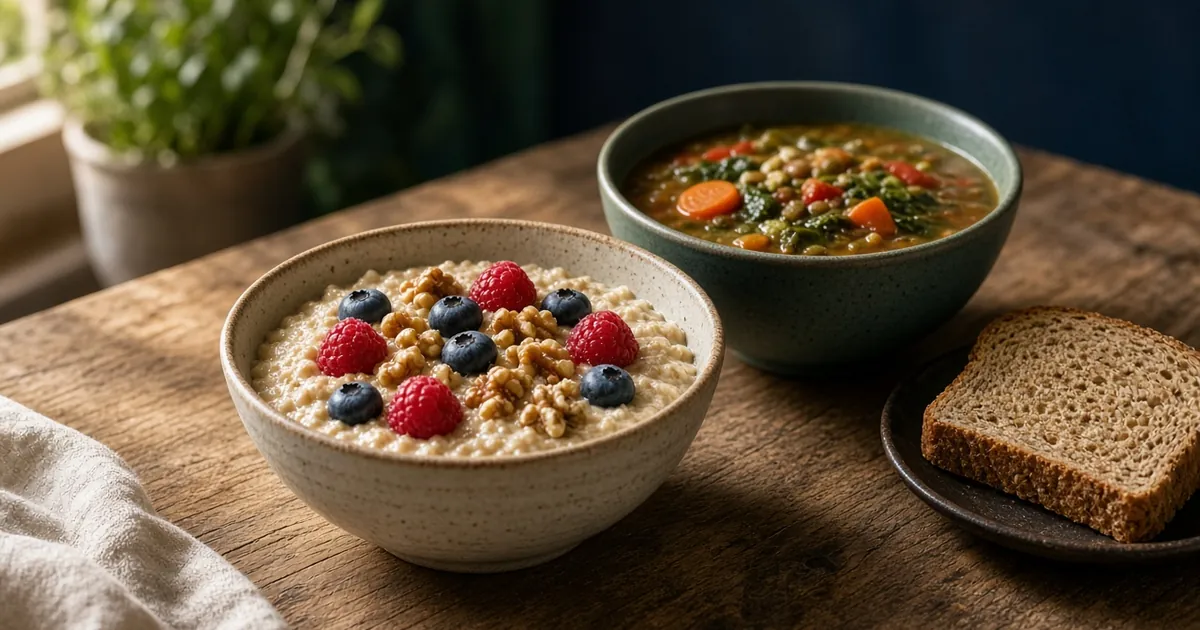
| Breakfast | Oatmeal with raspberries and chia seeds | 12 g |
| Lunch | Lentil soup and a whole-grain roll, plus an apple | 15 g |
| Snack | A handful of almonds | 3.5 g |
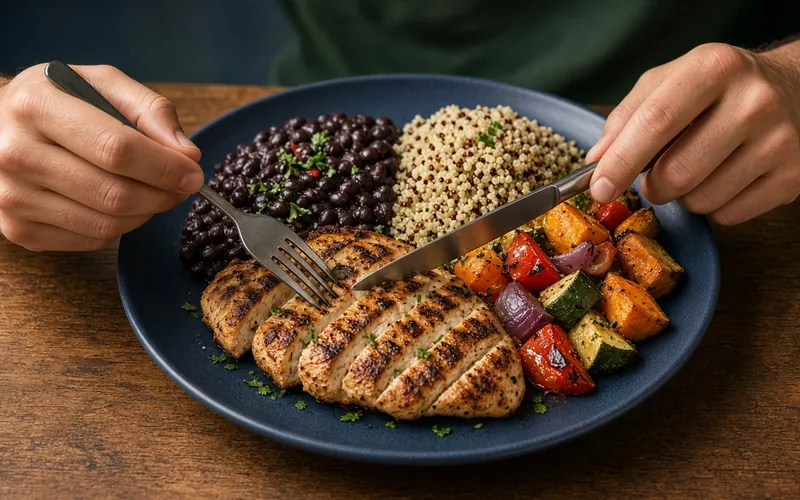
| Dinner | Chicken, brown rice, and a large serving of broccoli | 8.5 g |
Total: about 39 grams. You do not have to hit these numbers immediately.
How to add fiber without discomfort
Adding a lot of fiber at once can cause gas, bloating and cramps. Go slowly:
- Add a few grams a week until you reach your target.
- Drink plenty of fluids. Fiber works best with water. Mayo Clinic has guidance on fluid needs.
- Spread fiber across meals rather than eating it all at once.
- Cook vegetables and beans well if raw versions bother you.
- Rinse canned beans to reduce some of the gas-producing compounds and sodium.
What about fiber supplements?
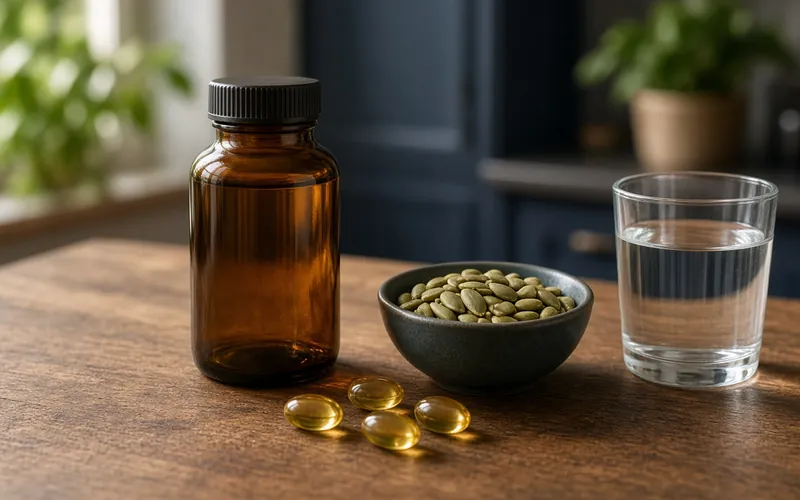
Fiber supplements such as psyllium can help with constipation and lower cholesterol, and they are useful for some men. But they do not provide the vitamins, minerals and other nutrients that come with fiber-rich foods. The Harvard Healthy Eating Plate emphasizes whole foods. If you use a supplement, start with a small dose, drink plenty of water and take it at a different time from medications, since fiber can affect absorption.
Fiber and the prostate
Diets rich in vegetables, fruits, beans and whole grains are generally recommended for overall health, including for men concerned about their prostate. There is no single food that protects the prostate, but a fiber-rich, plant-forward diet supports heart, metabolic and digestive health.
Fiber when eating out or on the go
Restaurant and convenience meals are often low in fiber. A few easy strategies:
- Order a side salad or vegetables instead of fries.
- Choose bean-based dishes like chili, bean burritos, lentil soup or hummus plates.
- Ask for whole-grain bread, wraps or brown rice where available.
- Keep fiber-rich snacks handy: apples, pears, bananas, baby carrots, nuts and whole-grain crackers.
- At breakfast meetings, pick oatmeal with fruit over pastries.
- At the grocery store, compare the fiber per serving on cereal, bread and cracker labels; aim for at least 3 grams per serving, and 5 or more is excellent.
Small choices like these can add 5-10 grams of fiber on a busy day.
The bottom line
Most men over 50 need about 28-31 grams of fiber a day and eat far less. Fiber supports regular bowels, heart health, steady blood sugar and a healthy weight. Get it mainly from vegetables, fruits, beans, lentils, whole grains, nuts and seeds. Increase it gradually, drink plenty of water, and make one simple swap at a time.
Frequently asked questions
How much fiber should a man over 50 eat?
About 28 to 31 grams a day, depending on age and calorie needs. Most men eat much less.
What foods are highest in fiber?
Beans, lentils, split peas, berries, pears, apples, broccoli, whole grains, nuts and seeds are among the best sources.
Can too much fiber cause problems?
Increasing fiber too quickly can cause gas, bloating and cramps. Increase gradually and drink enough water.
Does fiber lower cholesterol?
Soluble fiber, found in oats, beans, barley, apples and psyllium, can help lower LDL cholesterol as part of a healthy diet.
Sources
- Dietary fiber: Essential for a healthy diet Mayo Clinic
- Dietary Fiber MedlinePlus (National Library of Medicine)
- Dietary Guidelines for Americans U.S. Department of Agriculture and HHS
- Whole grains: Hearty options for a healthy diet Mayo Clinic
- Healthy Eating Plate The Nutrition Source, Harvard T.H. Chan School of Public Health
- About Cholesterol Centers for Disease Control and Prevention
- Water: How much should you drink every day? Mayo Clinic