How Much Protein Do Men Over 50 Need?
Muscle becomes harder to keep after 50, and protein is one of the tools that helps. Here is how much you likely need, how to spread it across the day and the best sources for your heart and health.
Many men grew up thinking of protein as something for bodybuilders. After 50, it becomes something for everyone. From middle age, men gradually lose muscle mass and strength, a process called sarcopenia. Less muscle means less strength, slower metabolism, poorer balance and a higher risk of falls and frailty later in life.
Protein, along with strength training, is one of the best tools for slowing that decline.
How much protein do you need?
The Recommended Dietary Allowance (RDA) for adults is 0.8 grams of protein per kilogram of body weight per day. The Harvard T.H. Chan School of Public Health explains that this is the minimum to meet basic needs, not necessarily the ideal amount.
| Body weight | RDA (0.8 g/kg) | Higher range (1.0-1.2 g/kg) |
|---|---|---|
| 150 lb (68 kg) | about 54 g | about 68-82 g |
| 180 lb (82 kg) | about 65 g | about 82-98 g |
| 200 lb (91 kg) | about 73 g | about 91-109 g |
| 220 lb (100 kg) | about 80 g | about 100-120 g |
Many researchers suggest that older adults may benefit from protein intakes in the range of about 1.0-1.2 g/kg a day, especially if they are active or trying to maintain muscle. If you have kidney disease, talk to your doctor before increasing protein, because you may need less.
The Dietary Guidelines for Americans note that many older adults, especially men, do not eat enough protein foods from a variety of sources, and recommend a range of protein foods including seafood, beans, peas, lentils, nuts and seeds.
Why spreading it out matters
Many American men eat a small breakfast, a moderate lunch and a big, protein-heavy dinner. Some research suggests that muscles respond better when protein is spread across the day, with roughly 25-30 grams at each meal, because there seems to be a limit to how much protein muscles can use at once for building and repair.
That means a breakfast of coffee and toast is a missed opportunity.
Protein and exercise
Protein alone does not build muscle. Muscles need a reason to grow, and that comes from strength training. Mayo Clinic explains that strength training helps preserve and build muscle at any age. The National Institute on Aging recommends strength exercises for older adults to maintain independence. The CDC recommends muscle-strengthening activities at least two days a week. See our strength training guide.
Eating a protein-rich meal or snack within a few hours of strength training may help with muscle repair.
The best protein sources
Not all protein foods are equal. The Harvard School of Public Health emphasizes that the "package" that comes with protein matters: fats, fiber, sodium and other nutrients.
| Food | Protein (approximate) |
|---|---|
| Chicken breast, cooked (3 oz) | 26 g |
| Salmon, cooked (3 oz) | 22 g |
| Canned tuna (3 oz) | 20 g |
| Greek yogurt, plain (6 oz) | 15-18 g |
| Cottage cheese (1/2 cup) | 12-14 g |
| Lentils, cooked (1 cup) | 18 g |
| Black beans, cooked (1 cup) | 15 g |
| Tofu, firm (1/2 cup) | 10-20 g |
| Eggs (2 large) | 12 g |
| Milk (1 cup) | 8 g |
| Peanut butter (2 tbsp) | 7 g |
| Almonds (1 oz) | 6 g |
Choose more often
- Fish and seafood, especially fatty fish
- Poultry
- Beans, lentils and peas
- Nuts and seeds
- Eggs
- Low-fat dairy and plain yogurt
- Soy foods like tofu and edamame
Choose less often
- Red meat, especially fatty cuts
- Processed meats like bacon, sausage, hot dogs and deli meats, which are linked with higher risks of heart disease and colorectal cancer
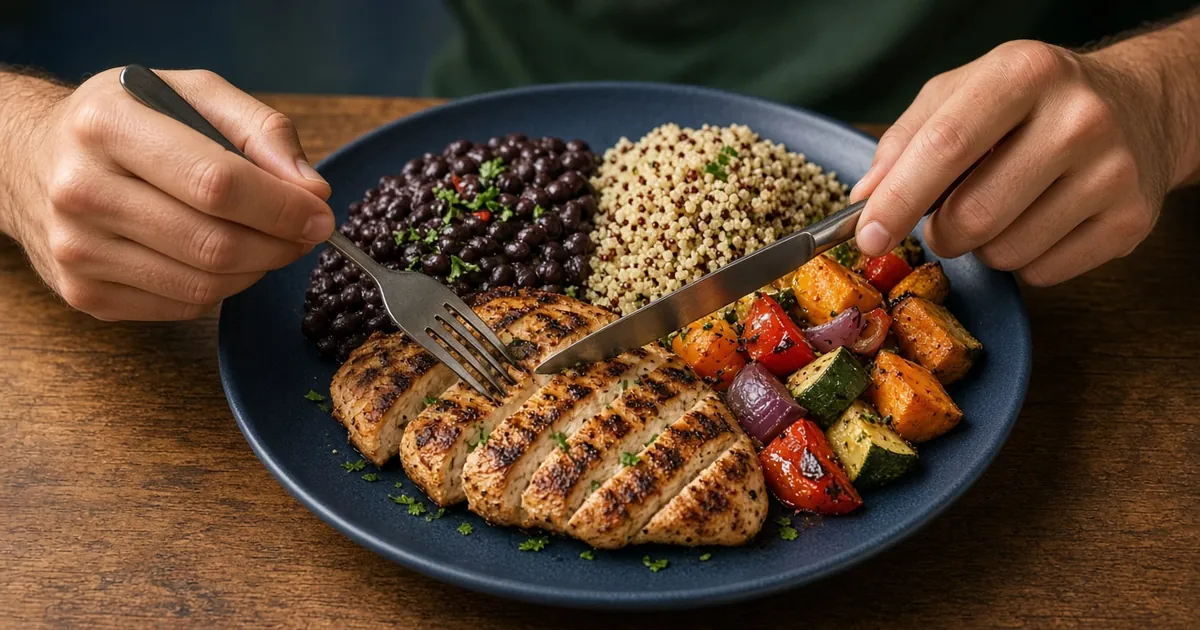
The Harvard Healthy Eating Plate suggests filling about a quarter of your plate with healthy protein.
Sample high-protein day
| Meal | Example | Protein (approximate) |
|---|---|---|
| Breakfast | Greek yogurt with berries and walnuts, or two eggs with whole-grain toast | 20-25 g |
| Lunch | Big salad with chicken or chickpeas, or a tuna sandwich on whole-grain bread | 25-30 g |
| Snack | Cottage cheese with fruit, or a handful of almonds | 6-14 g |
| Dinner | Grilled salmon or lentil chili with vegetables and brown rice | 25-30 g |
Total: about 80-100 grams.
Easy ways to add protein
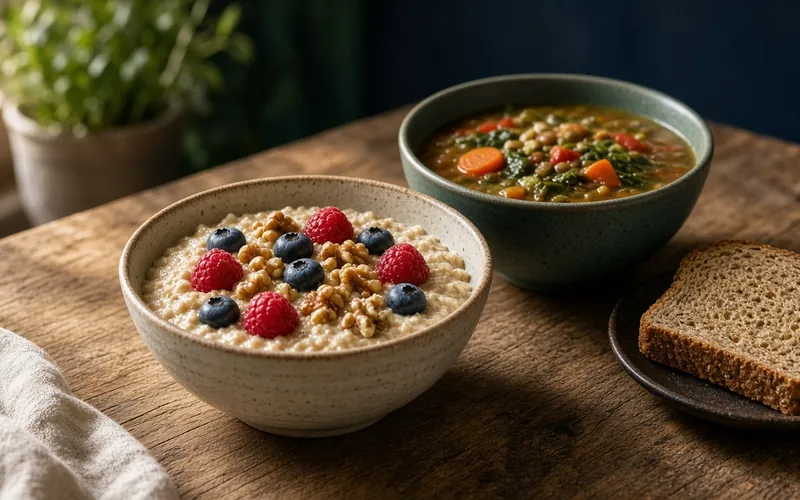
- Upgrade breakfast: eggs, Greek yogurt, cottage cheese, or oatmeal made with milk and topped with nuts.
- Keep convenient options: canned tuna or salmon, rotisserie chicken, hard-boiled eggs, beans and lentils.
- Snack smarter: nuts, cheese, edamame, roasted chickpeas.
- Add beans or lentils to soups, salads and pasta sauces.
What about protein powders?
Protein powders and shakes can be a convenient way to add protein if you struggle to eat enough, have a poor appetite or are very active. But they are not necessary for most men who eat a varied diet. The Office of Dietary Supplements notes that protein supplements are popular among active people but that most people can meet their needs through food.
If you use a powder:
- Choose one with a short ingredient list and little added sugar.
- Look for third-party testing seals, since supplements are not tested for safety before sale.
- Be aware that some products are high in calories.
Protein and other nutrients
Animal protein foods are also good sources of vitamin B12, which many men over 50 absorb less well. The Office of Dietary Supplements has more. Fish provides omega-3 fats; see our guide to omega-3s. Plant proteins come with fiber; see our guide to fiber for men over 50.
Protein and weight loss
Protein helps you feel full and preserve muscle when you lose weight. If you are trying to lose belly fat, prioritizing protein at each meal can help. See our guide to belly fat after 50.
The bottom line
Protein matters more as you age, because it helps you keep the muscle you need for strength, balance and independence. Many men over 50 do well with a little more than the basic RDA, spread across meals, paired with regular strength training and drawn mostly from fish, poultry, beans, dairy, eggs, nuts and soy. Start with breakfast and build from there.
Frequently asked questions
How much protein does a 60-year-old man need?
The RDA is 0.8 grams per kilogram of body weight, about 65 grams for a 180-pound man. Many experts suggest older adults may benefit from somewhat more, around 1.0-1.2 grams per kilogram, unless they have kidney disease.
Is too much protein bad for you?
For healthy people, moderately higher protein intakes are generally considered safe. People with kidney disease may need to limit protein. Choosing healthy sources matters too.
What is the best protein for older men?
Fish, poultry, beans, lentils, eggs, dairy, nuts and soy are all good choices. Limit processed meats and fatty red meat.
Do I need protein shakes?
Most men can get enough protein from food. Shakes can be helpful if your appetite is low or you have trouble meeting your needs.
Sources
- Protein The Nutrition Source, Harvard T.H. Chan School of Public Health
- Dietary Guidelines for Americans U.S. Department of Agriculture and HHS
- Strength training: Get stronger, leaner, healthier Mayo Clinic
- Healthy Eating Plate The Nutrition Source, Harvard T.H. Chan School of Public Health
- Three Types of Exercise Can Improve Your Health and Physical Ability National Institute on Aging (NIH)
- Dietary Supplements for Exercise and Athletic Performance NIH Office of Dietary Supplements
- Vitamin B12: Fact Sheet for Consumers NIH Office of Dietary Supplements
- Older Adult Activity: An Overview Centers for Disease Control and Prevention