BloodPril Review: What's in the Capsule, and What the Research Says
BloodPril is sold online to adults who check their blood pressure at home. We set the sales video aside and compared its named ingredients with independent research on blood pressure and heart health.
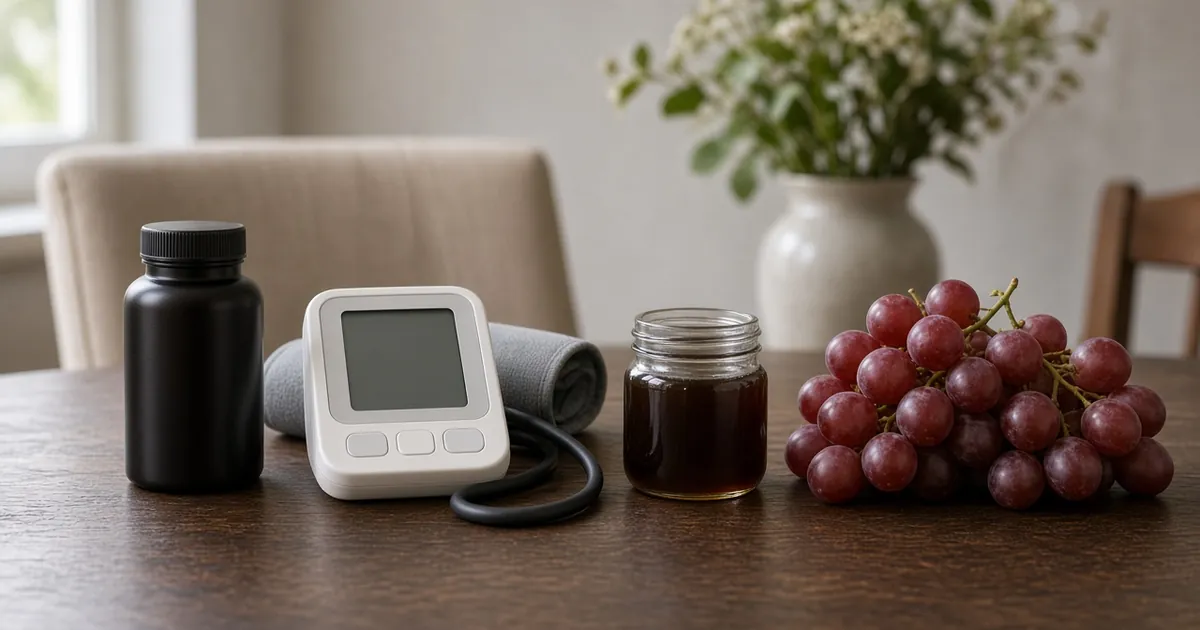
BloodPril is promoted with a long online video framed as a TV investigation into an "arterial flush ritual" based on a bitter honey from Sardinia. The video suggests the capsule can clean out arteries and bring blood pressure down. Here we look at what the product is said to contain and compare it with independent research.
How we wrote this review: we have not tested BloodPril ourselves and did not receive free product. This review is based on the product's sales presentation and the independent health sources linked throughout. We do not repeat testimonials, celebrity or TV references, or the specific results promised in the video.
What BloodPril is
BloodPril is a dietary supplement sold as capsules. The presentation describes four main ingredients (a bitter honey from Sardinia, extract of Cannonau grapes, vitamin K2 as MK-7 and an "endothelial renewal complex") and three supporting ones (CoQ10, magnesium and vitamin D3). The suggested use is one capsule each morning before breakfast. We could not find a published Supplement Facts panel with doses. Read the label on the seller's page before you pay.
The ingredients and the evidence
Magnesium
The Office of Dietary Supplements notes that magnesium supplements may lower blood pressure slightly, and that high doses from supplements can cause diarrhea and interact with some medicines. Diets rich in magnesium, such as the DASH plan, are linked to healthier blood pressure.
Bottom line on magnesium: a small possible effect, best obtained from food.
CoQ10
The NCCIH says the small amount of evidence available suggests CoQ10 probably does not have a meaningful effect on blood pressure, and that it may interact with warfarin and insulin.
Bottom line on CoQ10: unlikely to help blood pressure.
Vitamin K2
The Office of Dietary Supplements says research is still exploring whether vitamin K affects heart disease risk. It also warns that vitamin K can seriously interact with the blood thinner warfarin: people taking warfarin need a steady daily intake.
Bottom line on vitamin K2: unproven for blood pressure, and a real concern with warfarin.
Grape extract and bitter honey
Grape products contain polyphenols. The NCCIH describes research on grape seed extract for blood pressure as limited, with small effects at most. We found no good human research on Sardinian bitter honey for blood pressure or arteries.
Bottom line on grape and honey: plausible antioxidants, unproven for blood pressure.
Vitamin D3
The Office of Dietary Supplements explains that vitamin D supports bone health and that large trials have not shown that supplements prevent heart disease in people who are not deficient.
Bottom line on vitamin D: useful if you are low, not a blood pressure treatment.
Claims we could not verify
The presentation claims the formula dissolves "arterial cement," cleans arteries, normalizes blood pressure and protects against microplastics. We could not confirm these claims. Dietary supplements may not claim to treat or cure disease, and the Federal Trade Commission expects health claims to be backed by competent and reliable scientific evidence. We found no published trials of BloodPril.
Who might consider it
- Adults whose blood pressure is monitored and treated by a doctor, who want to try a supplement alongside their care and understand the evidence is weak.
- Buyers who are comfortable with the price and have read the refund terms.
Who should skip it or ask a doctor first
- Anyone taking warfarin or another blood thinner, because of vitamin K2 and CoQ10.
- Anyone taking blood pressure, diabetes or several other medicines.
- People with kidney disease, who should avoid extra magnesium unless their doctor approves.
- Anyone with readings above 180/120, chest pain, shortness of breath, vision changes or weakness. That needs emergency care.
How it is sold
BloodPril is sold through the seller's presentation page in kits of 2, 3 or 6 bottles, with a one-time payment and a refund guarantee. We do not list fixed prices because the seller sets and changes them, so confirm the total, shipping and refund terms before you pay.
What lowers blood pressure, with real evidence
The DASH eating plan lowers blood pressure in weeks for many people. Cutting salt, staying active, keeping a healthy weight, limiting alcohol and taking prescribed medicines as directed are the proven steps. The American Heart Association explains what your readings mean. Our guide to blood pressure basics shows how to measure at home and what to do with the numbers.
Our verdict
Frequently asked questions
Can BloodPril replace my blood pressure medicine?
No. We found no evidence that BloodPril lowers blood pressure, and stopping prescribed medicine can be dangerous. Talk to your doctor before changing anything.
What are the ingredients in BloodPril?
The sales presentation names Sardinian bitter honey, Cannonau grape extract, vitamin K2 (MK-7), an "endothelial renewal complex," CoQ10, magnesium and vitamin D3. Check the full label on the seller's page.
Is BloodPril safe with blood thinners?
Ask your doctor first. Vitamin K2 can seriously interact with warfarin, and CoQ10 may interact with it too.
How will I know if it is working?
Keep measuring your blood pressure the same way at home and share the readings with your doctor. Do not change medicines based on a supplement.
Sources
- About High Blood Pressure Centers for Disease Control and Prevention
- Understanding Blood Pressure Readings American Heart Association
- DASH Eating Plan National Heart, Lung, and Blood Institute (NIH)
- Magnesium: Fact Sheet for Consumers NIH Office of Dietary Supplements
- Coenzyme Q10 National Center for Complementary and Integrative Health (NIH)
- Vitamin K: Fact Sheet for Consumers NIH Office of Dietary Supplements
- Grape Seed Extract National Center for Complementary and Integrative Health (NIH)
- Vitamin D: Fact Sheet for Consumers NIH Office of Dietary Supplements
- Using Dietary Supplements Wisely National Center for Complementary and Integrative Health (NIH)
- Dietary Supplements U.S. Food and Drug Administration
- Health Products Compliance Guidance Federal Trade Commission