Blood Pressure Basics for Men Over 50: Numbers, Risks and Daily Habits
High blood pressure rarely causes symptoms, yet it is one of the biggest drivers of heart attack and stroke. Here is how to read your numbers, measure them correctly and lower them with everyday habits.
High blood pressure is sometimes called the silent killer, and for good reason. Most men who have it feel perfectly fine. Yet over years, it quietly damages blood vessels, the heart, kidneys, brain and eyes.
The CDC notes that most people with high blood pressure have no signs or symptoms, so many do not know they have it. The CDC also reports that about half of U.S. men have high blood pressure. Risk rises with age. The good news is that it is easy to measure and very manageable.
What the numbers mean
A blood pressure reading has two numbers:
- Systolic (top number): the pressure in your arteries when your heart beats.
- Diastolic (bottom number): the pressure when your heart rests between beats.
The American Heart Association uses these categories for adults:
| Category | Systolic (top) | Diastolic (bottom) | |
|---|---|---|---|
| Normal | Less than 120 | and | Less than 80 |
| Elevated | 120-129 | and | Less than 80 |
| High blood pressure stage 1 | 130-139 | or | 80-89 |
| High blood pressure stage 2 | 140 or higher | or | 90 or higher |
| Severe (seek care) | Higher than 180 | and/or | Higher than 120 |
Your doctor considers your readings over time, not a single number, along with your other risk factors.
Why it matters for men
The CDC notes that heart disease is the leading cause of death for men in the United States. High blood pressure is one of its key risk factors, along with high cholesterol, smoking, diabetes, obesity, poor diet, inactivity and excessive alcohol.
Over time, high blood pressure can lead to:
- Heart attack and heart failure
- Stroke
- Kidney disease
- Vision loss
- Vascular dementia and memory problems
- Erection problems, because of damage to blood vessels
Who is at higher risk?
- Men over 50
- A family history of high blood pressure
- Black men, who tend to develop it earlier and more severely
- Excess weight
- A high-sodium, low-potassium diet
- Physical inactivity
- Heavy alcohol use
- Smoking
- Diabetes, kidney disease or sleep apnea
- Chronic stress
How to measure at home
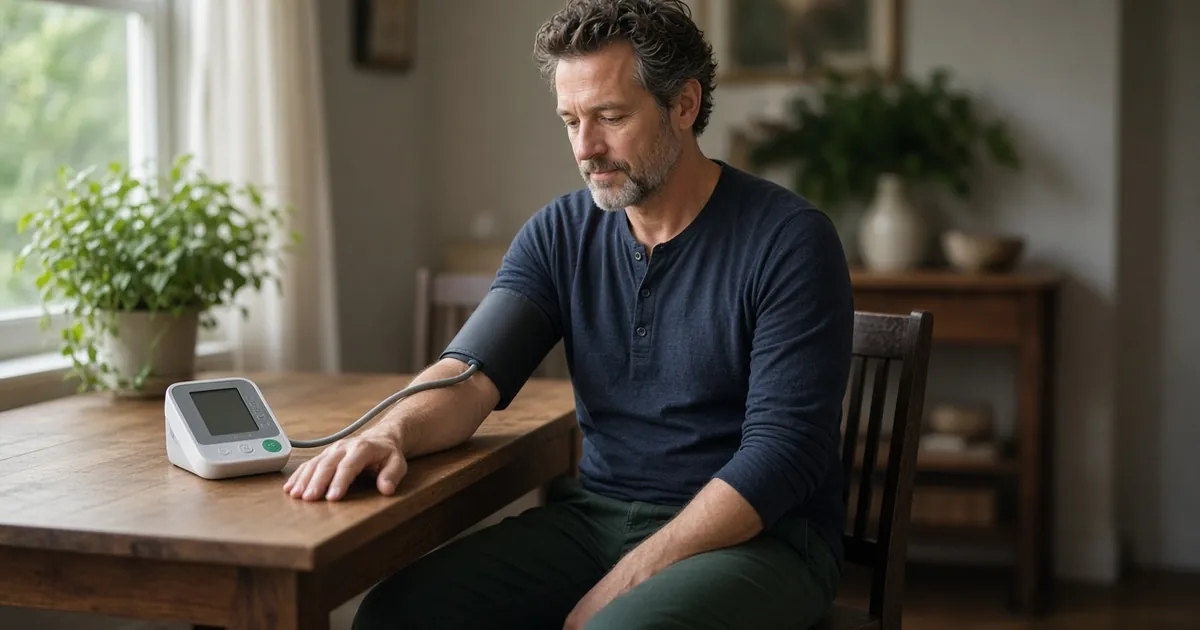
Home monitoring gives a better picture than an occasional reading at the doctor's office, where some people's pressure rises from nerves ("white coat" effect). Tips for accurate readings:
- Use a validated upper-arm cuff that fits your arm. Wrist and finger monitors are less reliable.
- Avoid caffeine, exercise and smoking for 30 minutes before.
- Empty your bladder.
- Sit quietly for 5 minutes with your back supported and feet flat on the floor.
- Rest your arm on a table at heart level, with the cuff on bare skin.
- Do not talk during the reading.
- Take two or three readings a minute apart and record them all.
- Measure at the same times each day, such as morning and evening.
Bring your log or monitor to your next appointment.
Daily habits that lower blood pressure
Follow the DASH eating plan
The DASH (Dietary Approaches to Stop Hypertension) plan was designed and tested to lower blood pressure. The NHLBI explains that it emphasizes:
- Vegetables, fruits and whole grains
- Fat-free or low-fat dairy
- Fish, poultry, beans, nuts and seeds
- Limited red meat, sweets and sugary drinks
- Limited sodium
Cut back on sodium
The Dietary Guidelines for Americans recommend less than 2,300 mg of sodium a day for adults, and lower amounts can help further for people with high blood pressure. Most sodium comes from processed and restaurant foods, not the salt shaker. The biggest sources include breads, cured meats, pizza, soups, sandwiches, burritos and savory snacks.
- Read labels and compare brands.
- Cook more at home.
- Use herbs, spices, lemon and vinegar for flavor.
- Ask for sauces on the side when eating out.
Get more potassium from food
Potassium helps balance sodium. Good sources include bananas, potatoes, beans, spinach, tomatoes, yogurt and oranges. If you have kidney disease or take certain medications, ask your doctor first.
Move more
Regular activity strengthens the heart and can lower blood pressure. Aim for at least 150 minutes of moderate activity, such as brisk walking, each week, plus strength training. See our guide to walking for health after 50.
Reach a healthy weight
Losing even a modest amount of weight can lower blood pressure, especially if you carry extra weight around the belly. See our guide to belly fat after 50.
Limit alcohol
Too much alcohol raises blood pressure. The National Institute on Aging notes that alcohol can also interact with blood pressure medicines.
Do not smoke
Smoking damages blood vessels and raises heart risk. Quitting at any age helps.
Sleep well and manage stress
The American Heart Association includes healthy sleep in its Life's Essential 8, its checklist for heart health. Untreated sleep apnea is a common, overlooked cause of high blood pressure.
About medication
If lifestyle changes are not enough, or your blood pressure is high, your doctor may recommend medication. Blood pressure medicines are well-studied, generally safe and very effective at preventing heart attacks and strokes. Many men need more than one. Take them as prescribed, do not stop them on your own, and tell your doctor about side effects; there are usually alternatives. The NHLBI has more on heart-healthy living.
The bottom line
High blood pressure is common after 50, usually silent, and a leading driver of heart attack and stroke. Know your numbers, measure correctly at home, and use the proven tools: DASH eating, less sodium, more potassium-rich foods, regular activity, a healthy weight, less alcohol, no smoking and good sleep. When medication is needed, it is one of the most effective ways to protect your heart and brain.
Frequently asked questions
What is a normal blood pressure for a man over 50?
Normal blood pressure is below 120/80 mm Hg for adults of any age. Readings of 130/80 or higher are considered high blood pressure.
Can you feel high blood pressure?
Usually not. Most people with high blood pressure have no symptoms, which is why regular measurement is important.
How quickly can lifestyle changes lower blood pressure?
Some people see improvements within a few weeks of eating less sodium, following DASH and exercising regularly. Results vary.
Is home blood pressure monitoring accurate?
Yes, when you use a validated upper-arm monitor with the right cuff size and follow good technique. Bring your monitor to your doctor to check it against their readings.
Sources
- About High Blood Pressure Centers for Disease Control and Prevention
- Understanding Blood Pressure Readings American Heart Association
- DASH Eating Plan National Heart, Lung, and Blood Institute (NIH)
- Heart-Healthy Living National Heart, Lung, and Blood Institute (NIH)
- About Men and Heart Disease Centers for Disease Control and Prevention
- Life's Essential 8 American Heart Association
- Dietary Guidelines for Americans U.S. Department of Agriculture and HHS
- Facts About Aging and Alcohol National Institute on Aging (NIH)