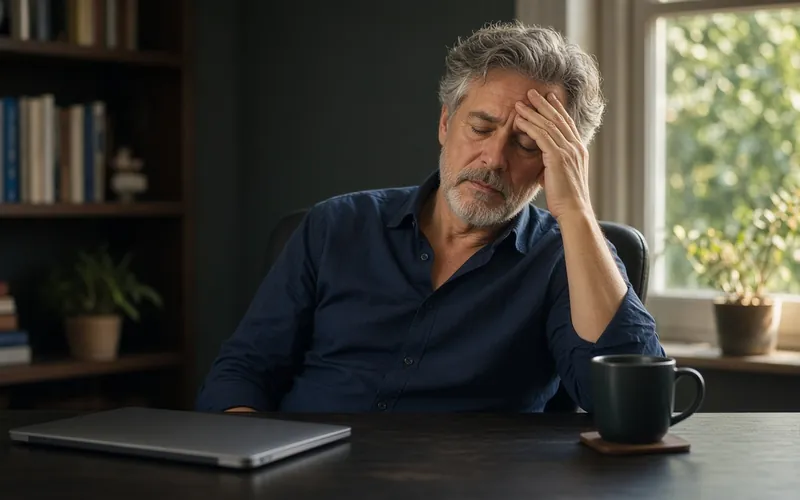
Stress and Energy After 50: How Pressure Drains Men and What Helps
Many men carry stress quietly, from work and money to aging parents and health worries. Over time it shows up as fatigue, poor sleep and a short fuse. Here is how stress works and what actually helps.

The 50s and 60s can be a time of quiet pressure. Careers peak or wind down, money worries shift toward retirement, children leave or come back, parents need care, and your own health begins to demand more attention. Many men respond by putting their head down and pushing through. That works for a while, but chronic stress has a way of showing up as exhaustion, poor sleep and a shorter temper.
Understanding how stress works makes it easier to manage.
How stress affects the body
When you face a challenge, your body releases stress hormones such as adrenaline and cortisol. Your heart beats faster, breathing quickens, muscles tense and blood sugar rises to give you energy. This "fight or flight" response is helpful for short bursts.
The National Institute of Mental Health explains that problems arise when stress is long-lasting. The body stays on alert, which can affect sleep, digestion, the immune system, blood pressure and mood. Mayo Clinic lists common effects of chronic stress:
| On your body | On your mood | On your behavior |
|---|---|---|
| Headaches | Anxiety, restlessness | Overeating or undereating |
| Muscle tension, back and neck pain | Irritability, anger | Angry outbursts |
| Chest tightness | Lack of motivation | Drinking more alcohol |
| Fatigue | Feeling overwhelmed | Withdrawing from others |
| Upset stomach | Sadness or low mood | Exercising less |
| Sleep problems | Trouble focusing | Using tobacco |
Why stress drains energy
Chronic stress drains energy in several ways:
- It disrupts sleep. A racing mind makes it harder to fall asleep and stay asleep, and stress hormones lighten sleep.
- It keeps muscles tense, which is tiring and contributes to aches.
- It changes habits. Stressed men often skip exercise, eat on the run, drink more and spend more time on screens.
- It wears down mood and motivation, which feels like fatigue.
Mayo Clinic lists stress and emotional factors among the common causes of persistent tiredness. Our guide to feeling tired all the time after 50 explores other causes.
Signs men often miss
Many men do not describe themselves as "stressed." Instead, stress may show up as:
- Snapping at family or colleagues over small things
- Feeling tired but wired at night
- Grinding your teeth or a tight jaw
- Needing a drink to unwind every evening
- Losing interest in hobbies or friends
- Trouble concentrating or forgetfulness
- Stomach problems, headaches or back pain with no clear cause
If several of these sound familiar, stress may be playing a bigger role than you think.
What helps
Move every day
Physical activity is one of the most effective stress relievers. It burns off stress hormones, releases mood-boosting chemicals and improves sleep. The National Institute on Aging notes that exercise can help reduce feelings of stress and improve mood in older adults. The CDC recommends at least 150 minutes of moderate activity a week plus strength training.
You do not need a gym. A brisk walk outdoors is one of the best stress tools there is. See our guide to walking for health after 50.
Slow your breathing
Slow, deep breathing activates the body's "rest and digest" system. Mayo Clinic describes several relaxation techniques. A simple one:
- Sit comfortably and relax your shoulders.
- Breathe in through your nose for a count of 4, letting your belly rise.
- Breathe out slowly through your mouth for a count of 6.
- Repeat for 3-5 minutes.
Try it before a stressful meeting, in traffic or at bedtime.
Protect your sleep
Stress and poor sleep feed each other. A regular schedule and a calming evening routine help break the cycle. The National Institute on Aging offers practical tips. Our wind-down routine for men shows a step-by-step approach.
Stay connected
Many men find their social circle shrinks after 50, as work friendships fade and families spread out, and loneliness is linked with poorer physical and mental health. Make regular time for friends, family, clubs, volunteering, faith communities or team sports. A weekly coffee or game with a friend counts.
Get things out of your head
Writing down worries and one next step for each can reduce mental clutter. Breaking big problems into small, concrete actions makes them feel more manageable.
Limit alcohol
A drink may feel like it takes the edge off, but alcohol worsens sleep, mood and anxiety over time. The National Institute on Aging notes that older adults are more sensitive to alcohol's effects.
Cut back on news and screens
Constant news and notifications keep the stress response switched on. Set times to check news, turn off non-essential alerts, and keep screens out of the bedroom.
Do something you enjoy
Hobbies, music, fishing, woodworking, gardening, sports, cooking: activities that absorb your attention give your brain a break from worry.
Stress at work and in retirement
Work stress often peaks in your 50s, with high responsibility and fears about job security. But retirement brings its own stress: loss of routine, identity and social contact. Men who plan for a sense of purpose, whether through part-time work, volunteering, mentoring or new projects, tend to adjust better.
Stress, the heart and blood pressure
Chronic stress can raise blood pressure and encourage habits that harm the heart, such as smoking, overeating and inactivity. Managing stress is part of looking after your heart. See our guide to heart health for men after 50.
When to get help
There is no prize for suffering in silence. Talking to a doctor, counselor or therapist is a practical step, not a sign of weakness. Therapy approaches such as cognitive behavioral therapy (CBT) are effective for stress, anxiety and depression. The NIMH encourages people to seek help if stress is affecting daily life or they feel overwhelmed.
The bottom line
Stress is part of life, but chronic stress drains energy, sleep and health. Men often show it as irritability, tiredness and more drinking rather than worry. Daily movement, slow breathing, protected sleep, time with people and less alcohol are powerful tools. And if stress feels like too much, talking to a professional is one of the smartest moves you can make.
Frequently asked questions
Can stress make you tired all the time?
Yes. Chronic stress disrupts sleep, keeps muscles tense and changes habits, all of which can cause persistent fatigue. Other causes should be checked too.
What is the fastest way to calm down?
Slow breathing with longer exhales, for example in for 4 seconds and out for 6, can calm the body within a few minutes. A short walk also helps.
How does stress affect men differently?
Men are more likely to show stress through irritability, anger, physical symptoms, drinking or withdrawing, and less likely to talk about it or seek help.
When should I see a doctor about stress?
See a doctor if stress interferes with work, sleep or relationships, if you feel low or hopeless for more than two weeks, or if you are using alcohol to cope.
Sources
- I'm So Stressed Out! Fact Sheet National Institute of Mental Health (NIH)
- Chronic stress puts your health at risk Mayo Clinic
- Relaxation techniques: Try these steps to lower stress Mayo Clinic
- Three Types of Exercise Can Improve Your Health and Physical Ability National Institute on Aging (NIH)
- Adult Activity: An Overview Centers for Disease Control and Prevention
- A Good Night's Sleep National Institute on Aging (NIH)
- Fatigue: Causes Mayo Clinic
- Facts About Aging and Alcohol National Institute on Aging (NIH)