Lower Back Pain After 50: Everyday Habits That Help
Most men will have lower back pain at some point, and it becomes more common with age. The good news: most back pain improves with time and the right habits. Here is what helps and when to get checked.
Bending over to tie your shoes, lifting a bag of mulch, a long drive, or nothing obvious at all: lower back pain can strike in many ways. The NINDS notes that low back pain is one of the most common reasons people visit a doctor and miss work.
After 50, the discs between the spinal bones lose water and height, joints in the spine can develop arthritis, and muscles weaken if not used. All of these make back pain more common. But aging does not mean you have to live with constant pain.
Common causes
Mayo Clinic and the NINDS list common causes of lower back pain:
- Muscle or ligament strain from lifting, sudden movements or poor posture
- Disc problems, such as a bulging or herniated disc pressing on a nerve
- Arthritis in the spine (osteoarthritis)
- Spinal stenosis, a narrowing of the space around the spinal cord and nerves, which is more common after 50
- Osteoporosis, which can lead to small fractures in the spine
Often, no single cause is found, and pain is described as "nonspecific." That does not make it less real, and it usually responds to the same self-care steps.
Red flags: when to get urgent care
Most back pain is not dangerous. But get medical help right away if you have back pain with:
- Numbness in the groin, buttocks or inner thighs ("saddle" area)
- New loss of bladder or bowel control, or trouble urinating
- Weakness or numbness in one or both legs that is getting worse
- Fever, chills or unexplained weight loss
- Pain after a fall or injury
- A history of cancer
- Severe pain at night that does not ease with rest or position change
What helps during a flare-up
Keep moving gently
Bed rest was once the standard advice, but research shows that staying active, within the limits of pain, usually helps people recover faster. Short walks, gentle stretches and normal daily activities, adjusted as needed, are better than lying down for days.
Use heat or cold
Cold packs can help in the first day or two, and heat (a heating pad or warm shower) can relax tight muscles. Use whichever feels better.
Pain relief
Over-the-counter pain relievers can help some people move more comfortably. Anti-inflammatory tablets are not right for everyone, especially men with high blood pressure, kidney problems, stomach ulcers or heart disease. Ask your doctor or pharmacist what is safe for you.
Find comfortable positions
Lying on your back with a pillow under your knees, or on your side with a pillow between your knees, often eases pain.
Everyday habits that help prevent flare-ups
Strengthen your core and hips
Strong abdominal, back, buttock and hip muscles support the spine. Mayo Clinic notes that strength training can help with chronic conditions and protect against injury. Simple exercises include:
| Exercise | How |
|---|---|
| Bridges | Lie on your back, knees bent; squeeze your buttocks and lift your hips; hold 3 seconds; 10 reps |
| Bird dog | On hands and knees, extend one arm and the opposite leg; hold 5 seconds; 8 reps each side |
| Dead bug | Lie on your back, arms up, knees bent at 90 degrees; slowly lower opposite arm and leg; 8 reps each side |
| Side plank (on knees) | Lie on your side, prop on your elbow and knees; lift your hips; hold 10-20 seconds each side |
| Sit to stand | Stand up from a chair without using your hands; 10 reps |
Start gently and stop if anything causes sharp pain. Our strength training guide has a full routine.
Stay active
Regular walking, swimming and cycling keep the spine and muscles healthy. The CDC recommends 150 minutes of moderate activity a week for older adults, plus strength and balance work. See our guide to walking for health.
Lift smart
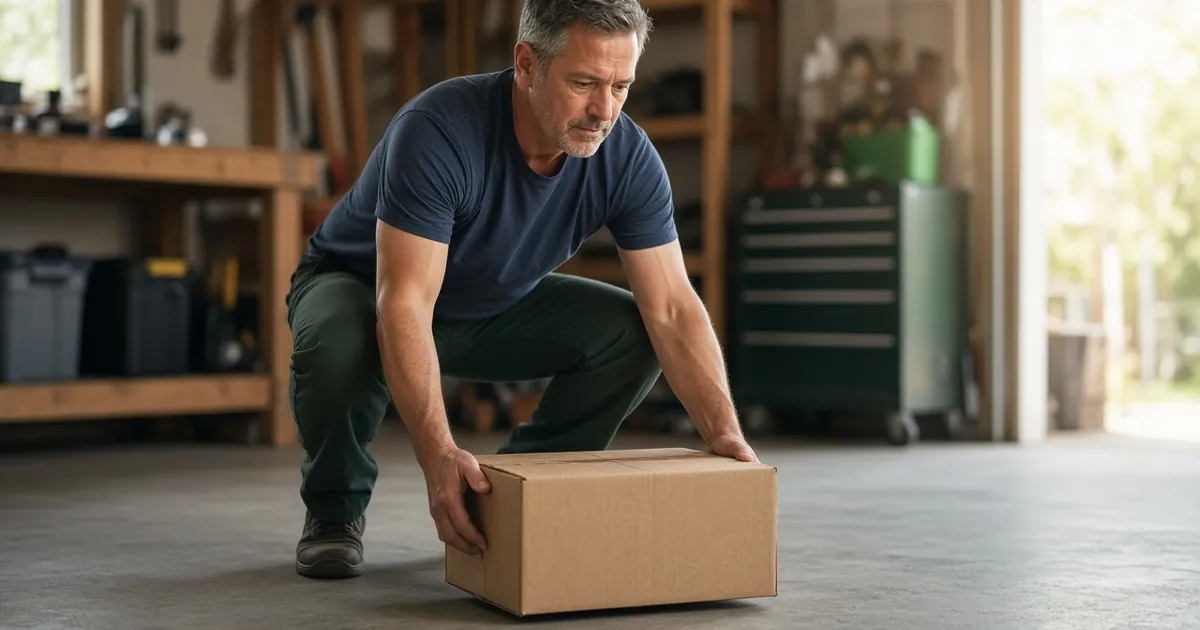
- Stand close to the object.
- Bend at your hips and knees, not your waist.
- Keep your back straight and tighten your stomach muscles.
- Hold the load close to your body.
- Lift with your legs, and avoid twisting while lifting.
- Get help or use a cart for heavy or awkward items.
Break up sitting
Long periods of sitting, especially slouched, load the spine. Stand up and move every 30-60 minutes. When sitting, keep your feet flat, your lower back supported and your screen at eye level.
Watch long drives
Adjust your seat so your knees are level with or slightly below your hips, use lumbar support, and stop every hour or two to walk around.
Keep a healthy weight
Extra weight, especially around the belly, increases strain on the lower back.
Sleep well
Poor sleep makes pain feel worse. A medium-firm mattress works for many people with back pain. The NHLBI recommends 7-9 hours of sleep for adults.
Stop smoking
Smoking reduces blood flow to the spinal discs and is linked with more back pain.
Manage stress
Stress tightens muscles and can make pain feel worse. Relaxation, activity and enough sleep help.
When to see a doctor or physical therapist
Even without red flags, see your doctor if pain:
- Lasts more than a few weeks
- Is severe or getting worse
- Spreads down one or both legs, especially below the knee
- Comes with numbness or tingling in the legs
A physical therapist can design a personalized exercise program, and research supports exercise therapy as one of the most effective treatments for long-lasting back pain. The National Institute on Aging also encourages exercise for older adults with chronic conditions. Imaging such as X-rays or MRI is often not needed in the first few weeks unless there are red flags.
Spinal stenosis: a special note for men over 50
Spinal stenosis often causes pain, numbness or heaviness in the buttocks and legs when standing or walking, which eases when sitting or bending forward (for example, leaning on a shopping cart). If this sounds familiar, see your doctor. Physical therapy, medications and, in some cases, procedures can help.
The CDC has more information on arthritis, including in the spine.
The bottom line
Lower back pain is very common after 50, but most episodes improve within weeks. Stay gently active, use heat or cold, and build habits that protect your back: core and hip strength, smart lifting, breaks from sitting, a healthy weight and good sleep. Know the red flags, and see a professional if pain lingers.
Frequently asked questions
Should I rest or move with lower back pain?
Gentle movement usually helps recovery more than bed rest. Stay as active as you comfortably can and avoid activities that clearly make pain worse.
What is the best exercise for lower back pain?
Walking, core and hip strengthening exercises such as bridges and bird dogs, and gentle stretching all help. A physical therapist can tailor a program to you.
When is back pain an emergency?
Seek urgent care for back pain with numbness in the groin or buttocks, new bladder or bowel problems, worsening leg weakness, fever, or after a fall or injury.
Can back pain be caused by sitting too much?
Long periods of sitting, especially slouched, can contribute to back pain. Breaking up sitting time and keeping good posture help.
Sources
- Back Pain National Institute of Neurological Disorders and Stroke (NIH)
- Back pain: Symptoms and causes Mayo Clinic
- Older Adult Activity: An Overview Centers for Disease Control and Prevention
- Strength training: Get stronger, leaner, healthier Mayo Clinic
- Three Types of Exercise Can Improve Your Health and Physical Ability National Institute on Aging (NIH)
- Arthritis Centers for Disease Control and Prevention
- How Much Sleep Is Enough? National Heart, Lung, and Blood Institute (NIH)