Foods for Prostate Health After 50: What the Evidence Actually Supports
No single food protects your prostate, but your overall eating pattern matters for urinary symptoms, weight and heart health. Here is what the research supports, what is hype, and a simple way to eat for the long haul.
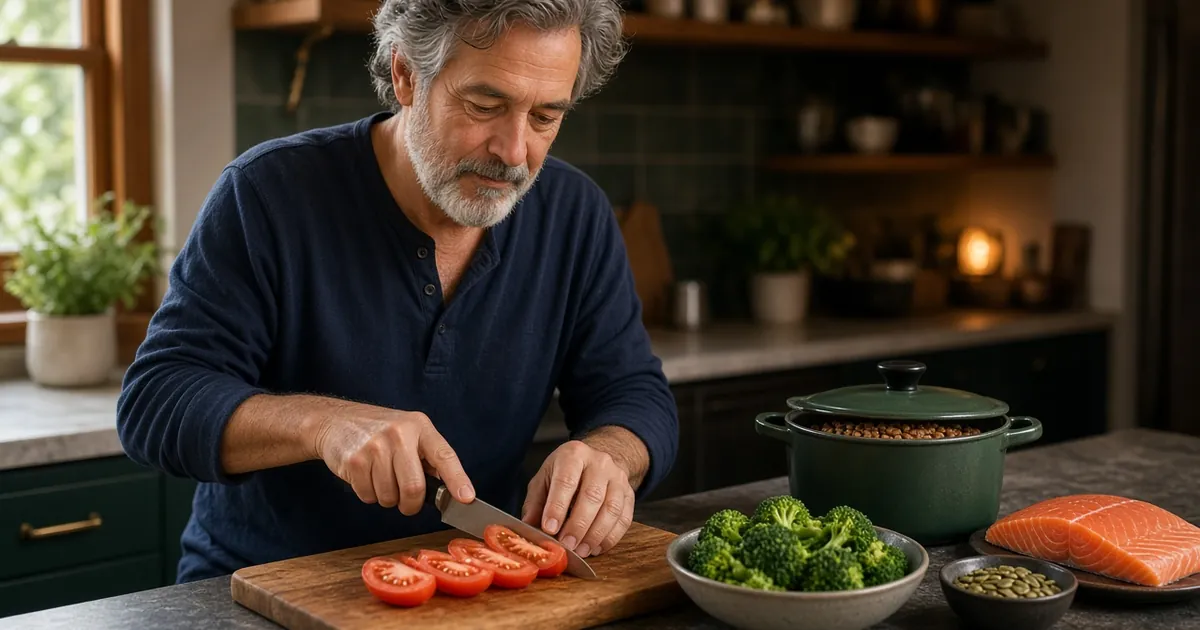
Search for "prostate foods" and you will find long lists of so-called superfoods, from tomatoes and broccoli to pomegranate juice and Brazil nuts, many with confident promises attached. For men over 50 dealing with more trips to the bathroom or thinking about prostate cancer risk, it is natural to wonder whether what is on your plate can help.
The honest answer is that diet matters, but not in a magic-bullet way. No single food has been shown to prevent an enlarged prostate or prostate cancer. What the research does support is that an overall healthy eating pattern helps you maintain a healthy weight, supports your heart and blood sugar, and may ease some urinary symptoms. Those benefits are worth having on their own.
This guide sorts through the most talked-about prostate foods, explains what the evidence shows, and offers a practical way to eat.
Why diet and the prostate are linked
The prostate is a walnut-sized gland below the bladder. After 50, many men develop benign prostatic hyperplasia (BPH), a noncancerous enlargement that can squeeze the urethra and cause a weak stream, urgency or waking at night to urinate. The NIDDK explains that BPH becomes more common with age and is driven largely by hormones and aging.
Diet enters the picture in several ways:
- Weight. Obesity and a larger waistline are linked to a higher risk of BPH symptoms, as Mayo Clinic notes. Eating patterns that help you maintain a healthy weight may help.
- Metabolic health. Diabetes, high blood pressure and heart disease are associated with BPH and urinary symptoms. Diets that protect your heart and blood sugar are a good bet for your prostate too.
- Bladder irritants. Some drinks and foods can make urinary symptoms worse, regardless of prostate size.
- Cancer risk. Researchers have studied many foods and nutrients in relation to prostate cancer. The National Cancer Institute notes that for most dietary factors, the evidence is not strong enough to make firm recommendations.
Foods with some supporting research
Tomatoes and lycopene
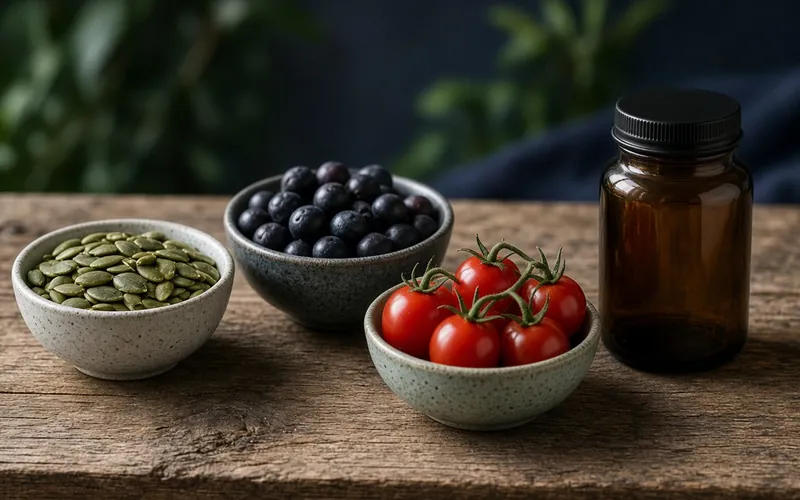
Tomatoes are the classic "prostate food" because they contain lycopene, a red pigment and antioxidant. Some observational studies have found that men who eat more tomato products have a lower risk of prostate cancer, while others have not. Lycopene supplements have not been shown to prevent prostate cancer. Cooked tomatoes, such as tomato sauce, provide more absorbable lycopene than raw.
Verdict: A healthy food worth eating regularly, but not a proven protector.
Cruciferous vegetables
Broccoli, cauliflower, cabbage, Brussels sprouts and kale contain compounds that have been studied for possible anti-cancer effects in the lab. Human studies on prostate cancer risk are mixed. These vegetables are rich in fiber, vitamins and minerals, and they fit well into a heart-healthy diet.
Verdict: Eat them for overall health; do not count on them as prostate protection.
Pumpkin seeds
Pumpkin seeds are often recommended for BPH. In a one-year randomized trial called GRANU, published in 2015, men with BPH symptoms who took pumpkin seed had a modestly greater improvement in symptom scores than those taking placebo, while a pumpkin seed extract capsule did not separate clearly from placebo. That is encouraging but modest, and more research is needed.
Verdict: A nutritious snack that may offer a small benefit for some men's urinary symptoms.
Fish and healthy fats
Fatty fish like salmon, sardines and trout provide omega-3 fats that support heart health. Research on omega-3s and prostate cancer has produced conflicting results, so it is best not to take high-dose fish oil specifically for your prostate. Swapping saturated fats from processed meats and fried foods for unsaturated fats from fish, nuts, seeds and olive oil is a well-supported heart-healthy choice, as the Harvard Nutrition Source explains.
Verdict: Good for your heart, which is good for you overall.
Beans, whole grains and fiber
Fiber-rich foods help with weight, blood sugar and cholesterol, and they prevent constipation, which can put pressure on the bladder and make urinary symptoms worse. MedlinePlus has a helpful overview of fiber sources. Our guide to fiber for men over 50 has easy ways to eat more.
Verdict: One of the most practical upgrades for most men.
Green tea, soy and pomegranate
These foods have been studied for prostate health with intriguing lab results but limited or inconsistent human evidence. They can be part of a healthy diet, but there is no strong evidence they prevent or treat prostate problems.
What to limit
- Processed and red meats. Diets high in processed meats are linked to several health problems, including heart disease and some cancers. Choose fish, poultry, beans and lentils more often.
- Very high calcium intake from supplements. Some studies have suggested a link between very high calcium intake and prostate cancer risk, though evidence is inconsistent. Get calcium mostly from food and avoid megadoses unless your doctor recommends them.
- Alcohol and caffeine, especially in the evening. Both increase urine production and can irritate the bladder, so urologists often suggest limiting them if you have BPH symptoms. The FDA notes that up to 400 mg of caffeine a day is generally safe for healthy adults, but less may be better for your bladder, and timing matters.
- Spicy and acidic foods may bother some men's bladders. Notice your own triggers.
Supplements: a word of caution
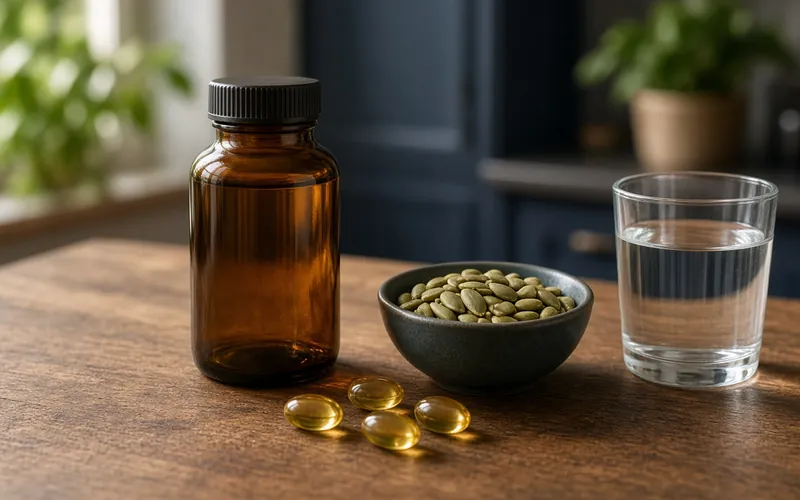
It is tempting to look for a concentrated version of "prostate foods" in a pill. The evidence for doing so is weak, and some supplements have backfired.
The large SELECT trial tested vitamin E and selenium for prostate cancer prevention. Neither prevented prostate cancer, and men taking vitamin E alone had a slightly higher risk of developing prostate cancer, as summarized by the National Cancer Institute. That is a good reminder that more is not always better.
For BPH, saw palmetto is the best-known herbal supplement. A Cochrane review found that saw palmetto did not improve urinary symptoms more than placebo, and NCCIH reaches a similar conclusion. Our article on prostate supplements and the evidence goes into more detail.
If you are considering any supplement, tell your doctor, especially if you take blood thinners or medicines for BPH or blood pressure.
A simple prostate-friendly plate
The Harvard Healthy Eating Plate is an easy model:
- Half the plate: vegetables and fruit, with plenty of color (tomatoes, broccoli, leafy greens, berries).
- A quarter: whole grains such as brown rice, oats, quinoa or whole-wheat pasta.
- A quarter: healthy protein such as fish, poultry, beans, lentils, tofu or nuts.
- Healthy oils like olive or canola oil, and water, coffee or tea (without much sugar) to drink.
A sample day might look like this:
- Breakfast: oatmeal with walnuts, pumpkin seeds and berries; coffee in the morning only.
- Lunch: lentil and vegetable soup with a whole-grain roll and a side salad with tomatoes.
- Snack: an apple and a small handful of almonds.
- Dinner: baked salmon, roasted broccoli and a sweet potato, with olive oil and lemon.
This pattern also supports heart health, healthy blood pressure and steady blood sugar, which is a big part of why it is worth following.
The bottom line
No food can guarantee a healthy prostate, and no diet has been proven to prevent BPH or prostate cancer. A plant-forward eating pattern with plenty of vegetables, fruit, beans, whole grains, fish and healthy fats supports a healthy weight, heart and blood sugar, and may ease some urinary symptoms. Limit evening alcohol and caffeine, be cautious with high-dose supplements, and see your doctor about urinary changes or screening. Our overview of BPH basics is a good next read.
Frequently asked questions
What foods are good for an enlarged prostate?
Vegetables, fruit, beans, whole grains, fish, nuts and seeds support a healthy weight and heart, which can help. Pumpkin seeds have modest evidence for urinary symptoms. No food shrinks the prostate.
Are tomatoes good for your prostate?
Tomatoes are a healthy food rich in lycopene. Some studies link tomato-rich diets with lower prostate cancer risk, but the evidence is mixed and lycopene supplements are not proven.
What drinks should men with BPH avoid?
Alcohol, caffeinated drinks and carbonated or very sugary drinks can irritate the bladder or increase urine output. Limiting them, especially in the evening, may help.
Can diet prevent prostate cancer?
No diet has been proven to prevent prostate cancer. A healthy eating pattern supports overall health, but regular check-ups and informed screening decisions remain important.
Sources
- Prostate Cancer Prevention (PDQ) – Patient Version National Cancer Institute (NIH)
- Antioxidants and Cancer Prevention National Cancer Institute (NIH)
- Prostate Enlargement (Benign Prostatic Hyperplasia) National Institute of Diabetes and Digestive and Kidney Diseases (NIH)
- Benign prostatic hyperplasia (BPH): Symptoms and causes Mayo Clinic
- Prostate Diseases MedlinePlus (National Library of Medicine)
- Vahlensieck W, et al. Effects of pumpkin seed in men with lower urinary tract symptoms due to benign prostatic hyperplasia in the one-year, randomized, placebo-controlled GRANU study. Urol Int. 2015 PubMed
- Saw Palmetto National Center for Complementary and Integrative Health (NIH)
- Tacklind J, et al. Serenoa repens for benign prostatic hyperplasia. Cochrane Database Syst Rev. 2012 PubMed
- Healthy Eating Plate The Nutrition Source, Harvard T.H. Chan School of Public Health
- Types of Fat The Nutrition Source, Harvard T.H. Chan School of Public Health
- Dietary Fiber MedlinePlus (National Library of Medicine)
- Spilling the Beans: How Much Caffeine Is Too Much? U.S. Food and Drug Administration