Circulation After 50: Why It Matters for Men's Energy and Vitality
Your arteries feed every organ you care about, from your heart and brain to your legs. Here is how circulation changes after 50, which quiet signals deserve a doctor's visit, and what actually keeps blood flowing well.

Most men think about their heart after 50, but fewer think about the blood vessels it pumps into. Those vessels decide how well oxygen and nutrients reach your legs on a hike, your brain during a long meeting and, yes, the parts of the body involved in intimacy. When circulation is good, you tend to feel it as energy and confidence. When it slips, the first signals are easy to dismiss as "just getting older."
This guide explains what changes in your blood vessels with age, which early signs are worth mentioning to your doctor, and the habits with the best evidence for keeping blood flowing.
What circulation actually does
Your arteries carry oxygen-rich blood away from the heart to every tissue in the body. Their inner lining, called the endothelium, is not a passive pipe. It helps arteries widen when muscles or organs need more blood and narrow again afterward. That flexibility is what lets your legs get extra blood when you climb stairs.
The National Heart, Lung, and Blood Institute (NHLBI) explains that over time a sticky substance called plaque, made of cholesterol, fat, calcium and other material, can build up in artery walls. This process, called atherosclerosis, narrows the arteries and reduces the supply of oxygen-rich blood. It can affect almost any artery: those of the heart, brain, legs, kidneys and pelvis. Depending on where it happens, the NHLBI lists consequences ranging from chest pain and heart attack to stroke, vascular dementia, erectile dysfunction and leg problems.
The important point for men in their 50s and 60s is timing. Plaque builds slowly, usually over decades, and often causes no symptoms until an artery is significantly narrowed.
Why circulation matters for energy and vitality
When people talk about "vitality," they usually mean a mix of things: having the energy to do what you enjoy, feeling physically capable, staying sharp, and feeling close and confident in your relationship. Circulation touches every one of those.
- Physical energy. Muscles that receive less blood tire faster. Many men first notice this as getting winded on a hill they used to take easily.
- Mental sharpness. The brain uses a large share of the body's blood supply, and the same risk factors that harm heart arteries also harm brain arteries.
- Intimacy and confidence. Healthy blood flow is part of normal sexual function in men. Problems here are common with age, and they are often linked to blood vessel health rather than to "nerves" or willpower.
That last point surprises many men, so it deserves a closer look.
An early warning sign many men keep to themselves
Mayo Clinic explains that erectile dysfunction (ED) and heart disease are closely linked: both depend on healthy blood vessels and share the same risk factors. Both often begin with damage to the inner lining of the arteries. Because the arteries involved in intimate function are smaller than those of the heart, problems can show up there years before heart symptoms such as chest pain.
Harvard Health Publishing reports that research has found ED can appear as early as five years before a major heart attack or stroke, and a Harvard-affiliated cardiologist advises men to see their doctor about it so that cardiovascular risk factors can be checked and managed. Another Harvard Health article describes persistent ED as an early alarm for hidden disease rather than only an intimate problem.
None of this means every change is a sign of heart disease. Occasional difficulties are common and can come from stress, fatigue, alcohol or relationship strain. The NIDDK also lists many medicines, including some blood pressure pills, antidepressants and antihistamines, as possible contributors. But a persistent change is a good reason to book a check-up, not something to manage alone.
Other circulation signals worth noticing
Beyond intimate health, the NHLBI and other mainstream sources point to several signs that blood flow may be reduced.
Leg pain when you walk
The NHLBI estimates that more than 8 million Americans aged 40 and older have peripheral artery disease (PAD), in which plaque narrows the arteries to the legs. A classic symptom is muscle pain or weakness in the calves, thighs or hips that starts with walking and eases within minutes of rest. Only about 1 in 4 people with PAD have this symptom, so many have none. The NHLBI adds that people with PAD often have plaque in the arteries of the heart and brain too.
Other signs
Getting winded more easily than before, cold feet, slow-healing sores or color changes in the legs can also point to reduced blood flow, among other causes. Report them, especially if you have diabetes.
The risk factors that matter most
The CDC notes that heart disease is the leading cause of death for men in the United States and names high blood pressure, high cholesterol and smoking as key risk factors. Diabetes, excess weight, inactivity, poor diet and heavy drinking add to the risk.
The American Heart Association's Life's Essential 8 brings these together into eight measures you can track: diet, physical activity, nicotine exposure, sleep, weight, cholesterol, blood sugar and blood pressure. The good news is that every one of them can be improved, at any age.
| Factor | Why it matters for your arteries | Where to start |
|---|---|---|
| Blood pressure | High pressure damages artery lining over time | Know your numbers; see blood pressure basics |
| Smoking | Damages blood vessels and speeds plaque buildup | Free help is available; quitting helps at any age |
| Blood sugar | High glucose harms small and large vessels | Ask about an A1C test |
| Cholesterol | LDL cholesterol feeds plaque | A simple blood test every few years, more often if high |
| Activity | Keeps vessels flexible and improves blood flow | Aim for 150 minutes a week |
| Sleep | Short or broken sleep raises blood pressure | 7 to 9 hours; check for snoring with pauses |
Habits that protect circulation
Walk, and keep walking
The American Heart Association recommends at least 150 minutes a week of moderate activity, such as brisk walking, plus muscle-strengthening activity twice a week. Mayo Clinic notes that regular exercise boosts HDL cholesterol, lowers triglycerides and keeps blood flowing smoothly, and that men who exercise regularly are less likely to have ED than men who do not. For men with PAD, supervised walking programs are a standard part of care. Our guide to walking for health after 50 has a simple plan.
Eat for your arteries
The DASH eating plan from the NHLBI emphasizes vegetables, fruit, whole grains, beans, nuts, fish and low-fat dairy while limiting salt, sugary drinks and fatty meats. It reliably lowers blood pressure and LDL cholesterol. You do not need a perfect diet: shifting a few meals a week toward this pattern helps.
Stop smoking
Smoking is one of the most damaging habits for blood vessels. The CDC offers free coaching through 1-800-QUIT-NOW, and quit-smoking medicines can improve your chances of success.
Know and manage your numbers
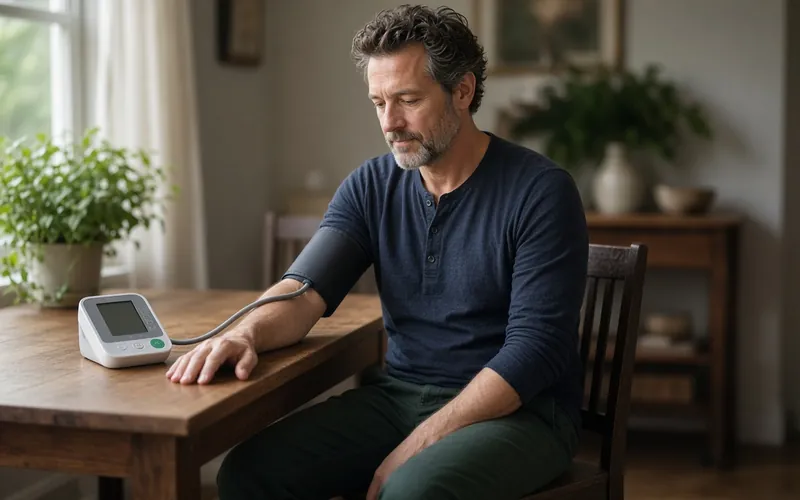
The CDC points out that high blood pressure often has no symptoms. Check it at least once a year, or more often if it has been high. If your doctor prescribes medicine for blood pressure, cholesterol or blood sugar, take it as directed: these medicines protect your arteries.
Protect your sleep
The NHLBI recommends 7 to 9 hours of sleep for adults. Loud snoring with pauses in breathing can be a sign of sleep apnea, which strains the heart and blood vessels.
Questions to ask at your next check-up
- What are my blood pressure, cholesterol and blood sugar numbers, and are they in a healthy range?
- Given my risk factors, should I have any heart or vascular tests?
- Could any of my medicines be affecting my energy or intimate health?
- Is it safe for me to start or increase exercise?
The bottom line
Circulation is the quiet engine behind your energy, sharpness and confidence after 50. Plaque builds silently, so the early signals, including changes in intimate health, are worth raising with your doctor rather than hiding. The most powerful ways to protect your arteries are not secret: regular walking, not smoking, a heart-healthy diet, good sleep and keeping blood pressure, cholesterol and blood sugar in range.
Frequently asked questions
Can you improve circulation after 50?
Yes. Regular aerobic activity, stopping smoking, a diet rich in vegetables and whole grains, and good control of blood pressure, cholesterol and blood sugar all support healthier blood vessels at any age. They cannot undo every change, but they slow plaque buildup and lower the risk of heart attack and stroke.
Is erectile dysfunction really linked to heart disease?
Mayo Clinic and Harvard Health both describe a strong link: ED and heart disease share risk factors and often begin with the same damage to blood vessel lining. Not every case is heart-related, but persistent ED is a good reason to have your heart risk checked.
What is the best exercise for circulation?
Brisk walking is the most accessible choice and is backed by strong evidence. Cycling, swimming and other aerobic activities work too, ideally adding up to at least 150 minutes a week, plus strength training twice a week.
Do supplements improve circulation?
We are not aware of any supplement with strong evidence for improving circulation in healthy men. The proven steps are exercise, not smoking, diet and treating high blood pressure, cholesterol and diabetes. Talk with your doctor before trying a supplement, especially if you take heart medicines.
Sources
- Atherosclerosis: What Is Atherosclerosis? National Heart, Lung, and Blood Institute (NIH)
- Peripheral Artery Disease: What Is Peripheral Artery Disease? National Heart, Lung, and Blood Institute (NIH)
- Erectile dysfunction: A sign of heart disease? Mayo Clinic
- Under-the-radar heart risks Harvard Health Publishing
- Erectile dysfunction: Is it a sign of hidden health problems? Harvard Health Publishing
- Symptoms & Causes of Erectile Dysfunction National Institute of Diabetes and Digestive and Kidney Diseases (NIH)
- About Men and Heart Disease Centers for Disease Control and Prevention
- Life's Essential 8 American Heart Association
- About High Blood Pressure Centers for Disease Control and Prevention
- AHA Recommendations for Physical Activity in Adults American Heart Association
- Exercise: 7 benefits of regular physical activity Mayo Clinic
- DASH Eating Plan National Heart, Lung, and Blood Institute (NIH)
- How to Quit Smoking Centers for Disease Control and Prevention (Tips From Former Smokers)
- How Much Sleep Is Enough? National Heart, Lung, and Blood Institute (NIH)